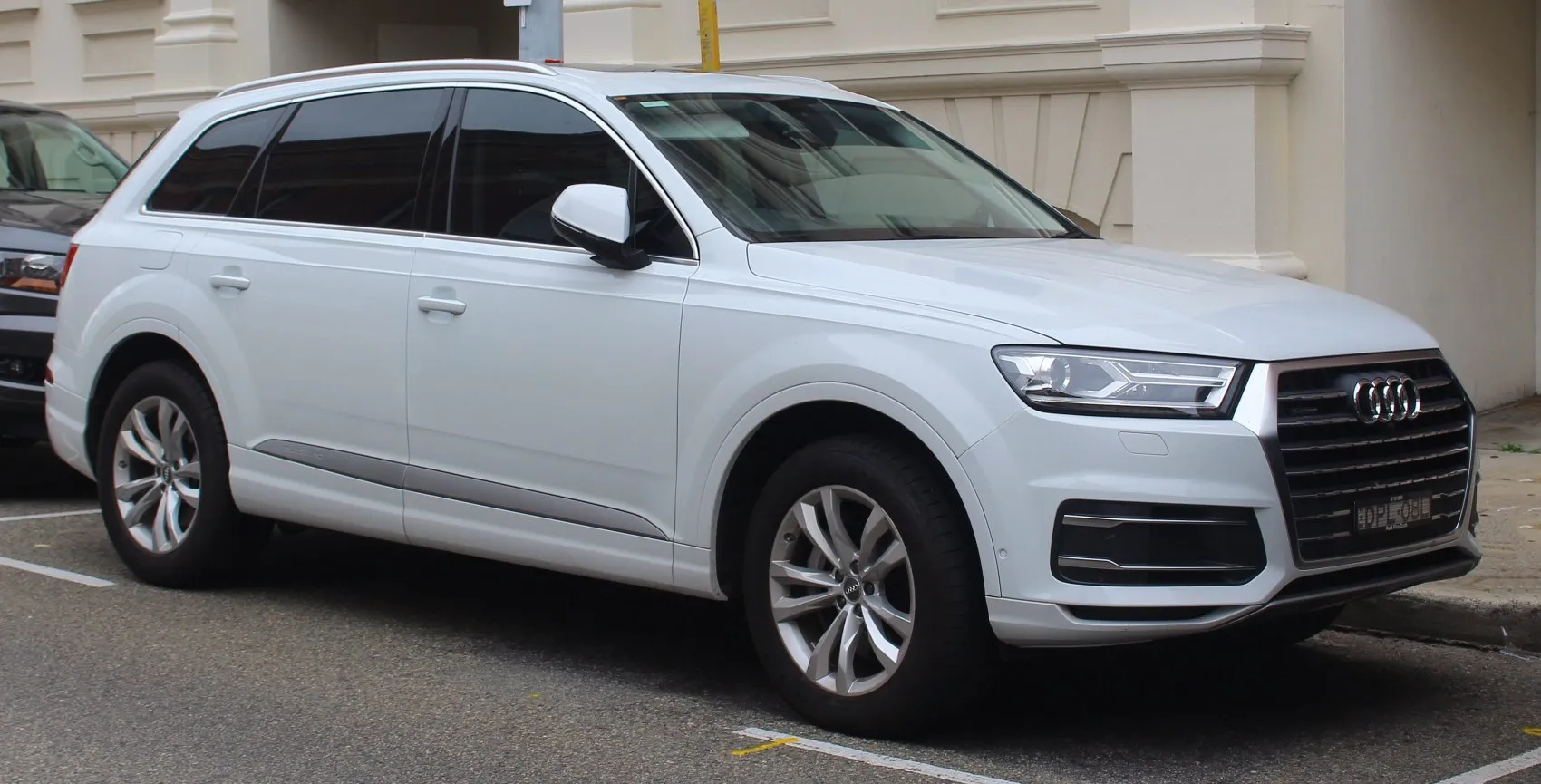
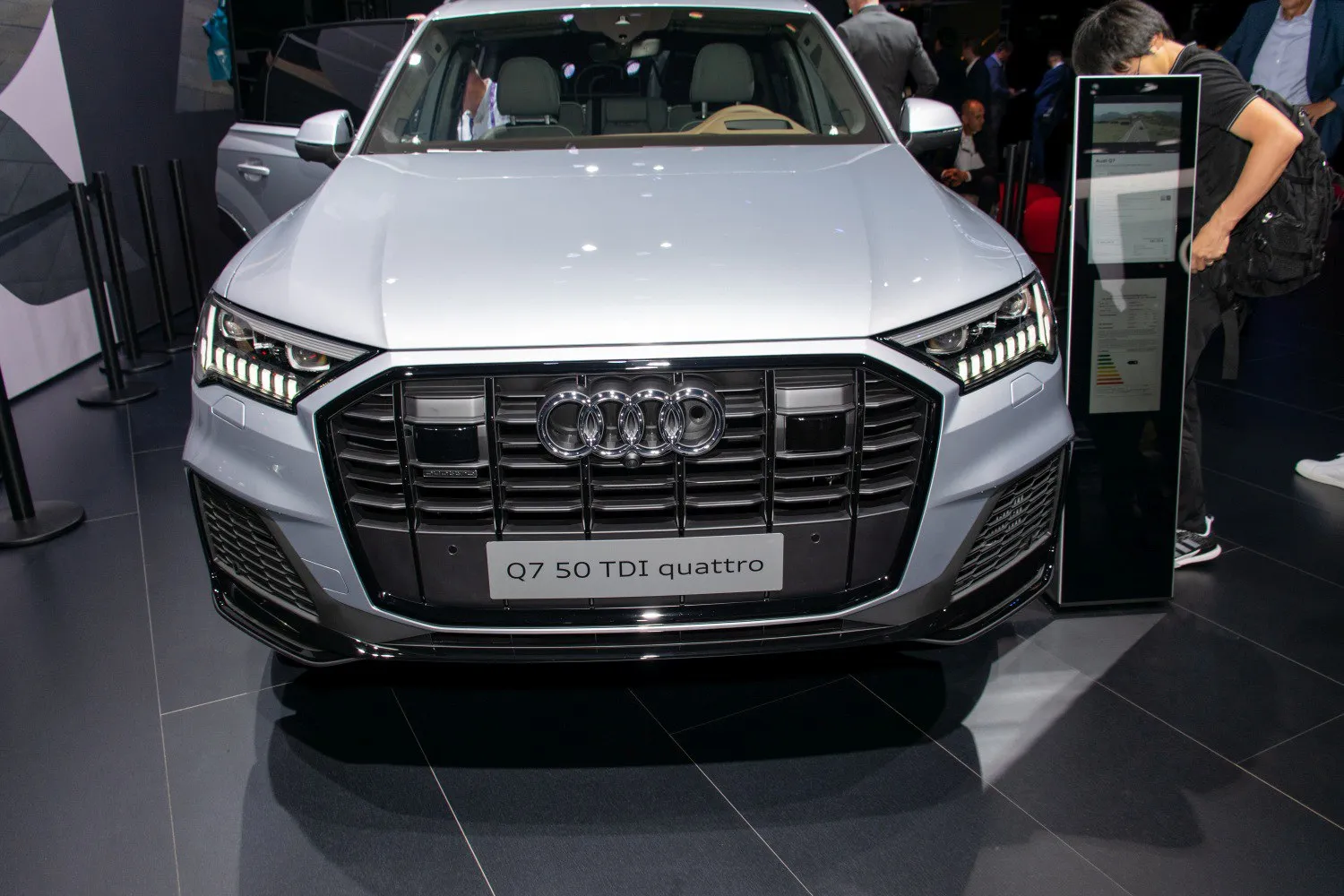
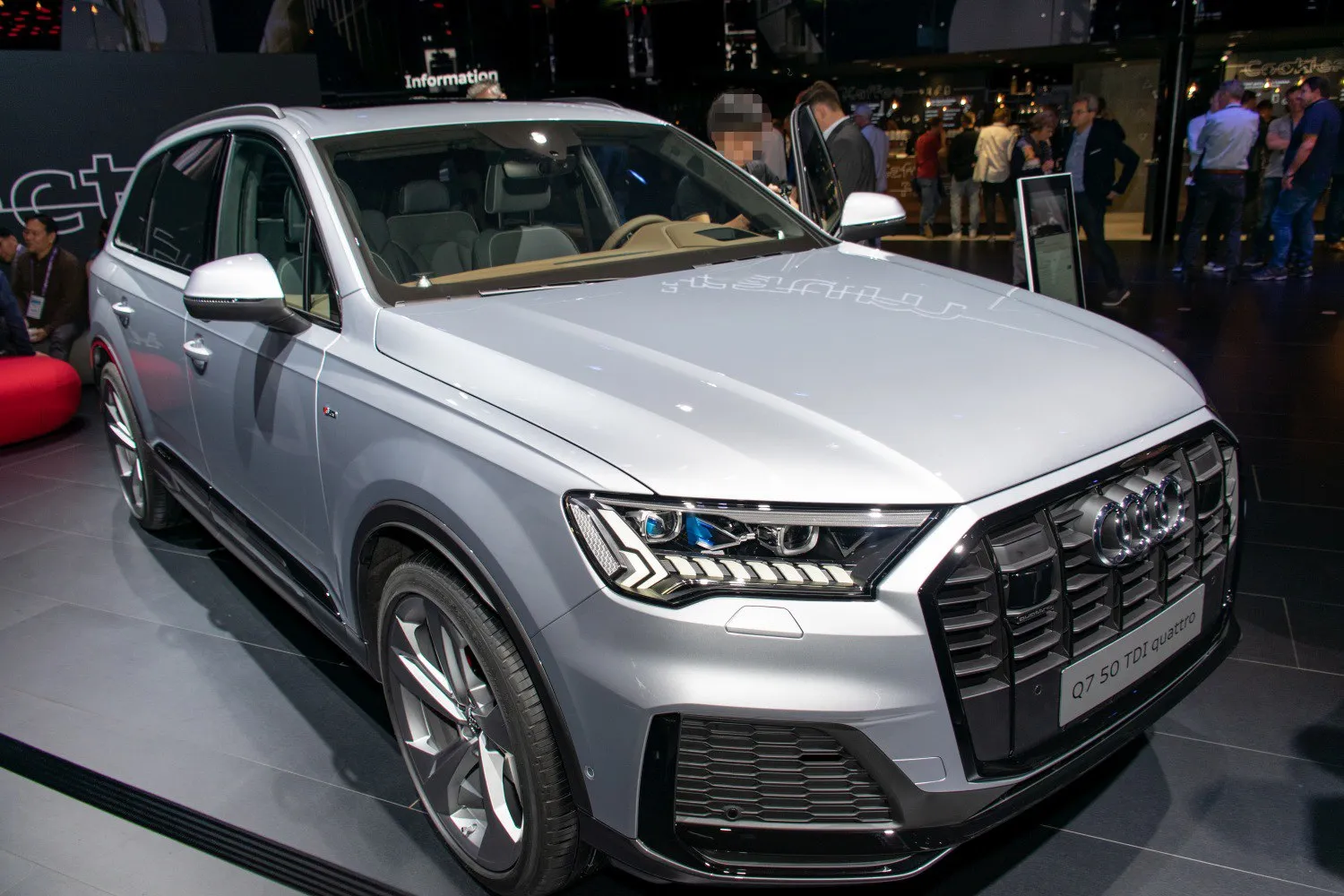
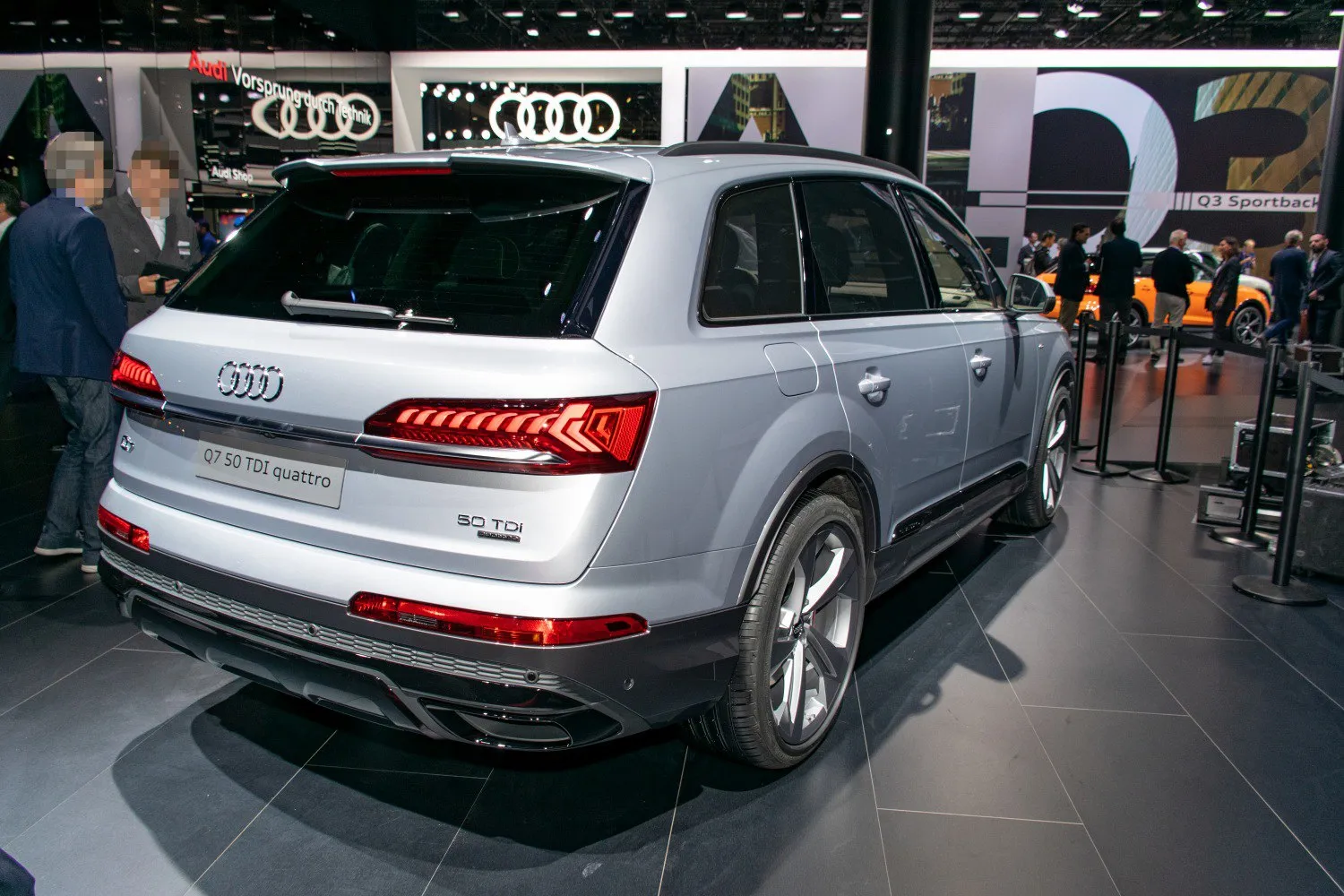
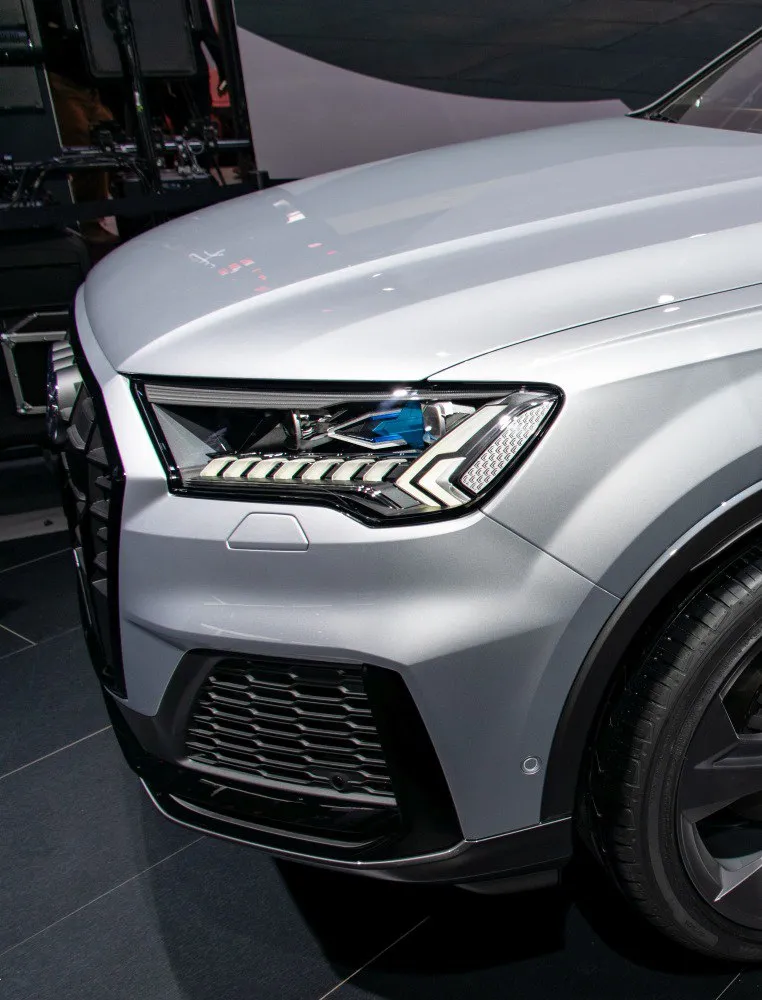
Audi Q7 Typ 4M, facelift 2019 60 TFSI e V6 (456 Hp) Plug-in Hybrid quattro tiptronic
Audi Q7:
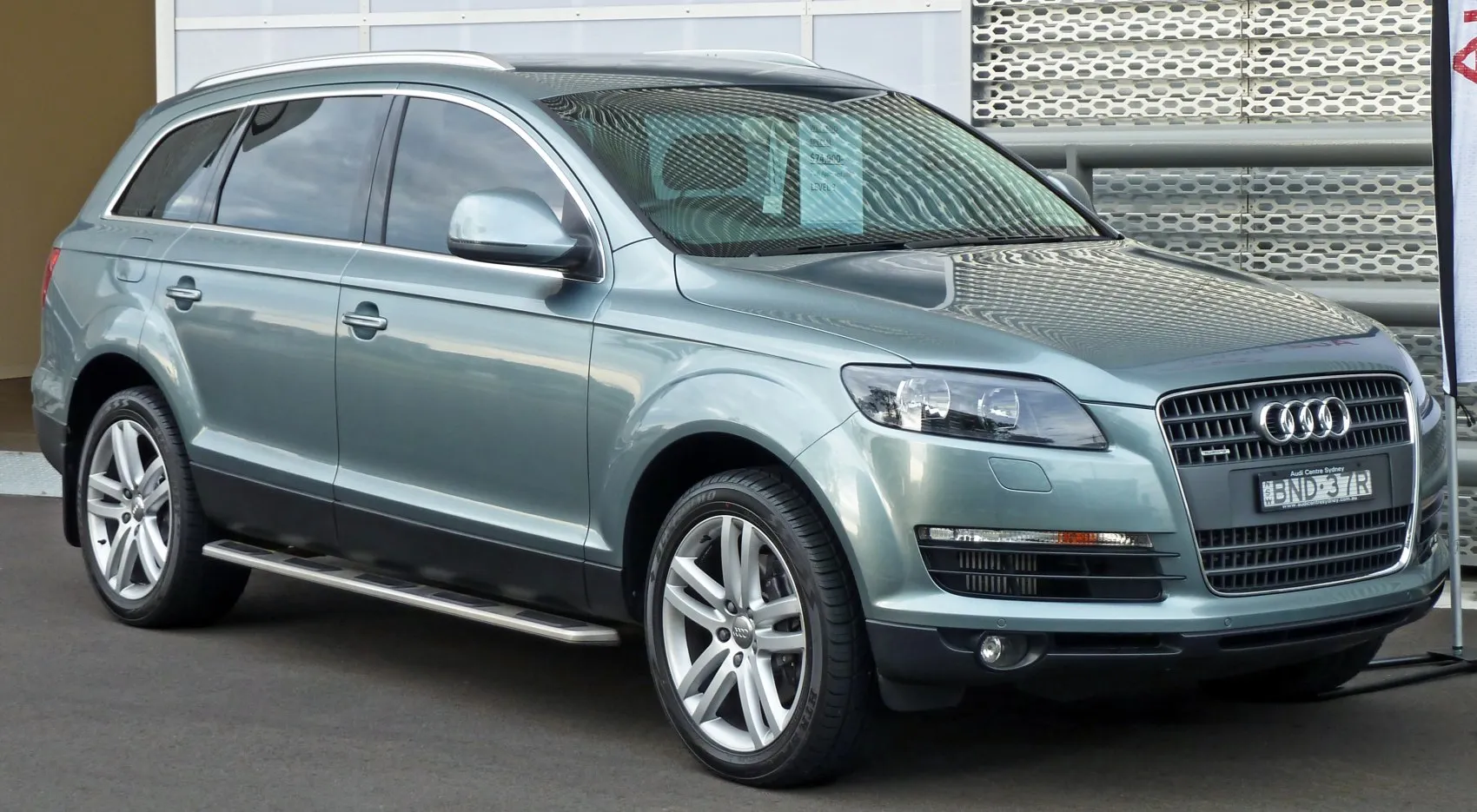
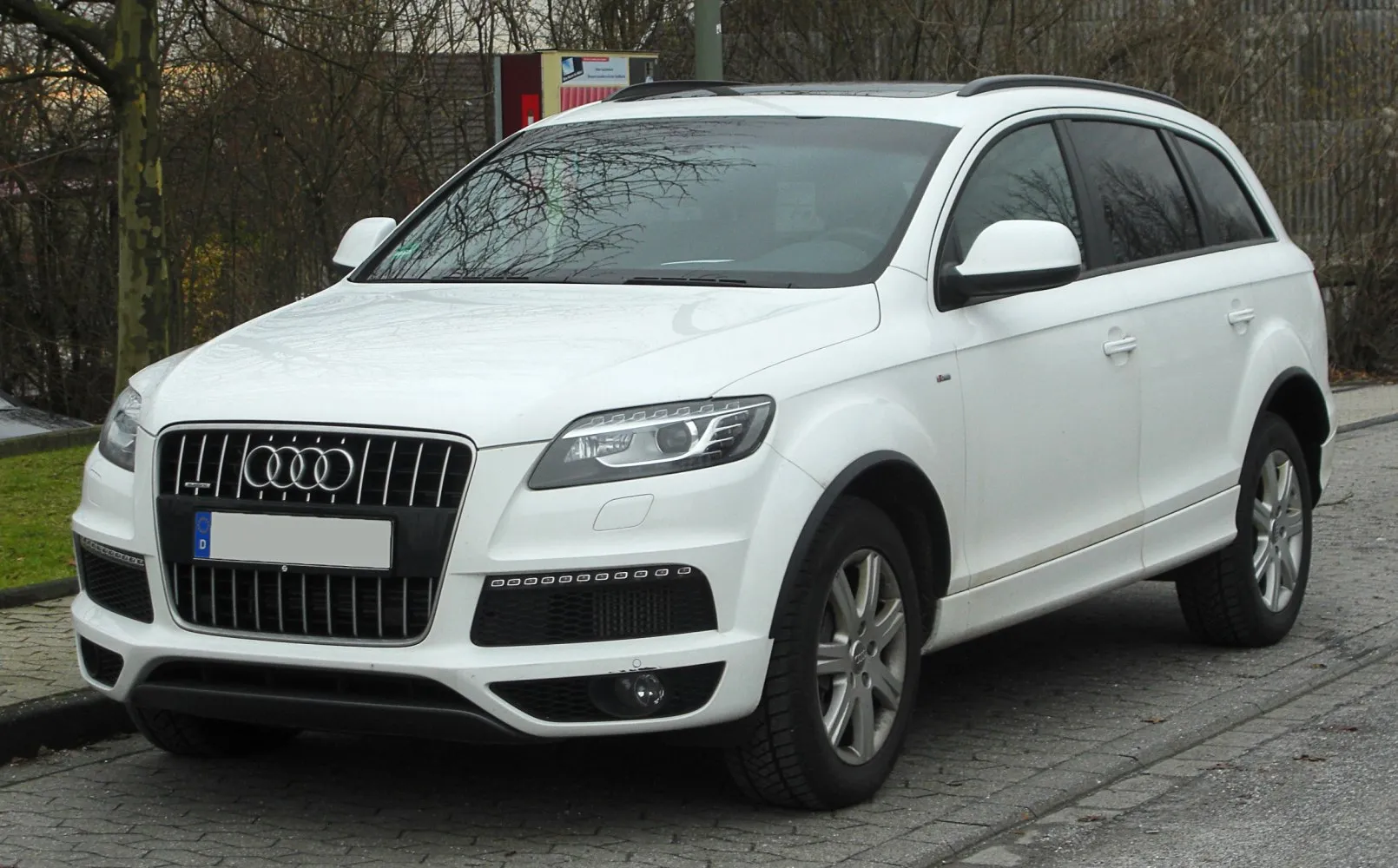
The Audi Q7 is a full-size luxury crossover SUV made by the German manufacturer Audi, unveiled in September 2005 at the Frankfurt Motor Show. Production of this seven-seater SUV began in November 2005 at the Volkswagen Bratislava Plant in Bratislava, Slovakia.
The Q7 was the first SUV sold by Audi and went on sale in 2006. Later, Audi's second SUV, the Q5, was unveiled as a 2009 model. Audi has since unveiled a third SUV model, the Q3, which went on sale in the third quarter of 2011, and a fourth SUV model, the Q2, which went on sale in November 2016. The Q7 shares a Volkswagen Group MLB platform and chassis with the Bentley Bentayga, Lamborghini Urus, Porsche Cayenne and the Volkswagen Touareg....(Read more on Wikipedia)
Typ 4M, facelift 2019 Overview:
Audi Q7 (Typ 4M, facelift 2019). With 450 Nm of torque, it offers ample pulling power. At around 2460 kg, it’s on the heavier side. All‑wheel drive provides excellent grip, ideal for off‑road use. Acceleration is excellent (0–100 km/h in 5.7 s). The top speed reaches 240 km/h. A sport utility vehicle offering higher ground clearance and versatile cargo space. Seating for 5 makes it ideal for daily use.
Pros and Cons:
Pros:
- • Adequate and balanced power output (248 hp) for versatile driving.
- • Sporty acceleration: 0-100 km/h in 6.9 sec.
- • All-wheel drive for superior traction in all conditions.
- • Independent multi-link suspension for premium ride comfort.
- • Ventilated disc brakes for reliable cooling and stopping power.
- • Standard trunk space (402 L) suitable for daily needs.
- • Turbocharged engine ensures better torque delivery at low RPMs.
- • Direct fuel injection technology for optimized combustion.
Cons:
- • Relatively high fuel consumption: 11.2 L/100 km combined.
Specifications:
Specifications are compared to those of the previous generation(Typ 4M: August, 2015 - 2018).
| General: |
| Brand: | Audi |
|---|
| Model: | Q7 |
|---|
| Generation: | Typ 4M, facelift 2019 |
|---|
| Modification (Engine): | 60 TFSI e V6 (456 Hp) Plug-in Hybrid quattro tiptronic |
|---|
| Start of production: | December, 2019 |
|---|
| End of production: | September, 2020 |
|---|
| Powertrain Architecture: | PHEV (Plug-in Hybrid Electric Vehicle) |
|---|
| Body type: | SUV |
|---|
| Seats: | 5 |
|---|
| Doors: | 5 |
|---|
| Engine: |
| Engine systems: | Start & Stop System |
|---|
| Power: | 340 Hp @ 5200-6400 rpm. Same horsepower |
|---|
| Power per litre: | 113.5 Hp/l [11mm more] |
|---|
| Torque: | 450 Nm @ 1340-5300 rpm. |
|---|
| Engine Model/Code: | DCBE More details about the engine DCBE |
|---|
| Engine displacement: | 2995 |
|---|
| Number of cylinders: | 6 |
|---|
| Engine configuration: | V-engine |
|---|
| Number of valves per cylinder: | 4 |
|---|
| Fuel injection system: | Direct injection |
|---|
| Engine aspiration: | Turbocharger, Intercooler |
|---|
| Valvetrain: | DOHC |
|---|
| Engine oil capacity: | 7.2 l |
|---|
| Coolant: | 10 l |
|---|
| Engine layout: | Front, Longitudinal |
|---|
| Cylinder Bore: | 84.5 mm mm |
|---|
| Piston Stroke: | 89 mm mm |
|---|
| Compression ratio: | 11.2:1 |
|---|
| Performance: |
| Fuel Type: | Petrol / electricity |
|---|
| Fuel consumption (economy) - combined (NEDC): | 2.8-3 l/100 km |
|---|
| Fuel consumption (economy) - combined: | 2.8-3 l/100 km |
|---|
| Emission standard: | Euro 6d-TEMP-EVAP-ISC |
|---|
| Acceleration 0 - 100 km/h: | 5.7 sec |
|---|
| Acceleration 0 - 62 mph: | 5.7 sec |
|---|
| Maximum speed: | 240 km/h |
|---|
| Weight-to-power ratio: | 5.4 kg/Hp, 185.4 Hp/tonne |
|---|
| Weight-to-torque ratio: | 3.5 kg/Nm, 284.6 Nm/tonne |
|---|
| Max speed (electric): | 135 km/h |
|---|
| Acceleration 0 - 60 mph: | 5.4 sec |
|---|
| Space: |
| Kerb Weight: | 2460 |
|---|
| Max. weight: | 3145 |
|---|
| Max. roof load: | 100 kg |
|---|
| Max load: | 685 |
|---|
| Trunk (boot) space - minimum: | 650 l |
|---|
| Permitted trailer load with brakes (12%): | 3500 kg |
|---|
| Fuel tank capacity: | 75 l |
|---|
| Permitted trailer load without brakes: | 750 kg |
|---|
| Permitted towbar download: | 140 kg |
|---|
| Size: |
| Length: | 5063 mm mm [11mm more] |
|---|
| Width: | 1970 mm mm [2mm more] |
|---|
| Height: | 1741 mm mm [Same height.] |
|---|
| Wheelbase: | 2995 mm mm [1mm more] |
|---|
| Width including mirrors: | 2212 mm |
|---|
| Front track: | 1679 mm |
|---|
| Rear (Back) track: | 1690 mm |
|---|
| Front overhang: | 977 mm |
|---|
| Rear overhang: | 1091 mm |
|---|
| Minimum turning circle (turning diameter): | 12.5 m [above average] |
|---|
| Powertrain: |
| Drivetrain Architecture | The Internal combustion engine (ICE) and the electric motor permanently drive the four wheels of the car with the ability to work in full electric or mixed mode. |
|---|
| Drive wheel | All wheel drive (4x4) |
|---|
| Number of gears | 8 |
|---|
| Transmission type | Automatic |
|---|
| Gearbox type | tiptronic |
|---|
| Front brakes | Ventilated discs [Best for performance and cooling.] |
|---|
| Rear brakes | Ventilated discs [Best for performance and cooling.] |
|---|
| Assisting systems | ABS (Anti-lock braking system) |
|---|
| Steering type | Steering rack and pinion |
|---|
| Power steering | Electric Steering |
|---|
| Tires size | 255/55 R19; 285/45 R20; 285/40 R21; 285/35 R22 |
|---|
| Wheel rims size | 8.5J x 19; 9J x 20; 9.5J x 21; 10J x 22 |
|---|
| Front suspension | Independent multi-link suspension, Transverse stabilizer |
|---|
| Rear suspension | Independent multi-link suspension, Transverse stabilizer |
|---|
| Electric: |
| Gross battery capacity: | 17.3 kWh |
|---|
| Battery technology: | Lithium-ion (Li-Ion) |
|---|
| Battery location: | Under the trunk |
|---|
| System power: | 456 Hp |
|---|
| System torque: | 700 Nm |
|---|
| All-electric range: | 41-42 km |
|---|
| Electric motor power: | 128 Hp |
|---|
| Electric motor Torque: | 350 Nm |
|---|
| Average Energy consumption: | 22.2-22.9 kWh/100 km |
|---|
| Electric motor location: | Between the combustion engine and the transmission |
|---|
| All-electric range (WLTP): | 41-42 km |
|---|
| Battery weight: | 202 kg |
|---|
| Battery voltage: | 308 V |
|---|
| Average Energy consumption (NEDC): | 22.2-22.9 kWh/100 km |
|---|
| Recuperation output: | 80 kW |
|---|







Every driver has a story. What’s yours with the Audi Q7?