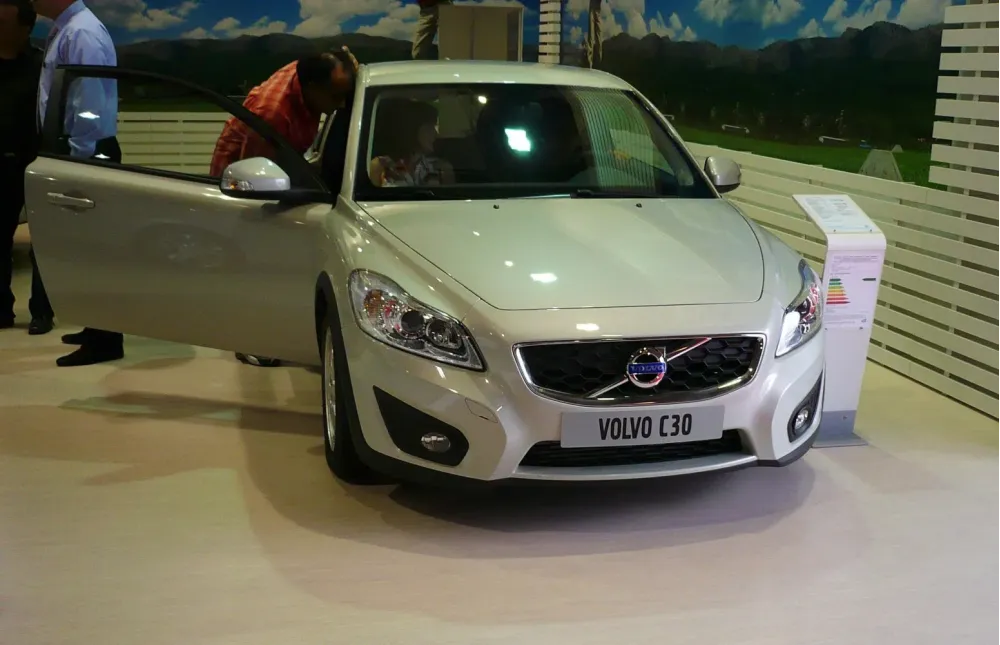
Click on image to view the full photo gallery
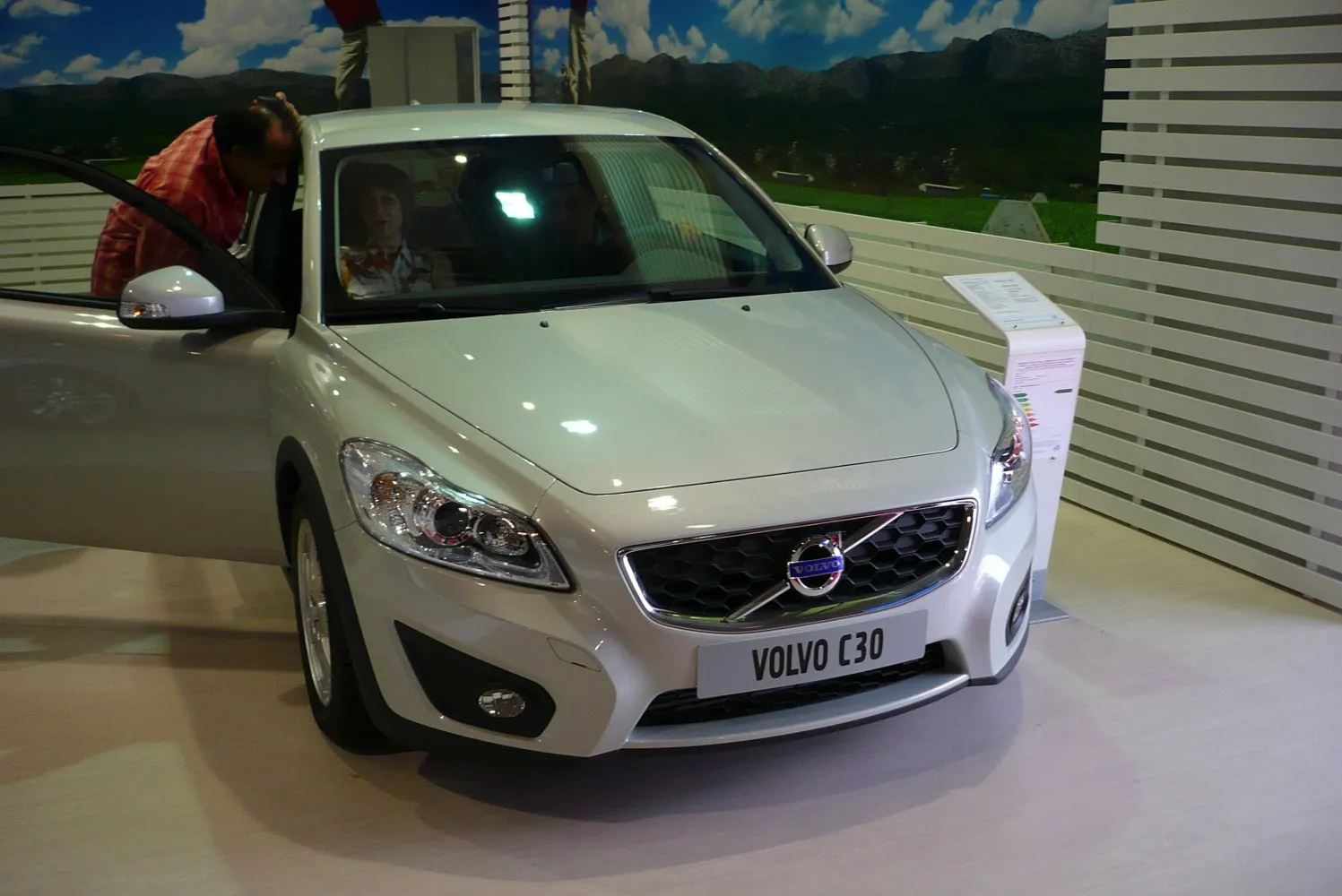
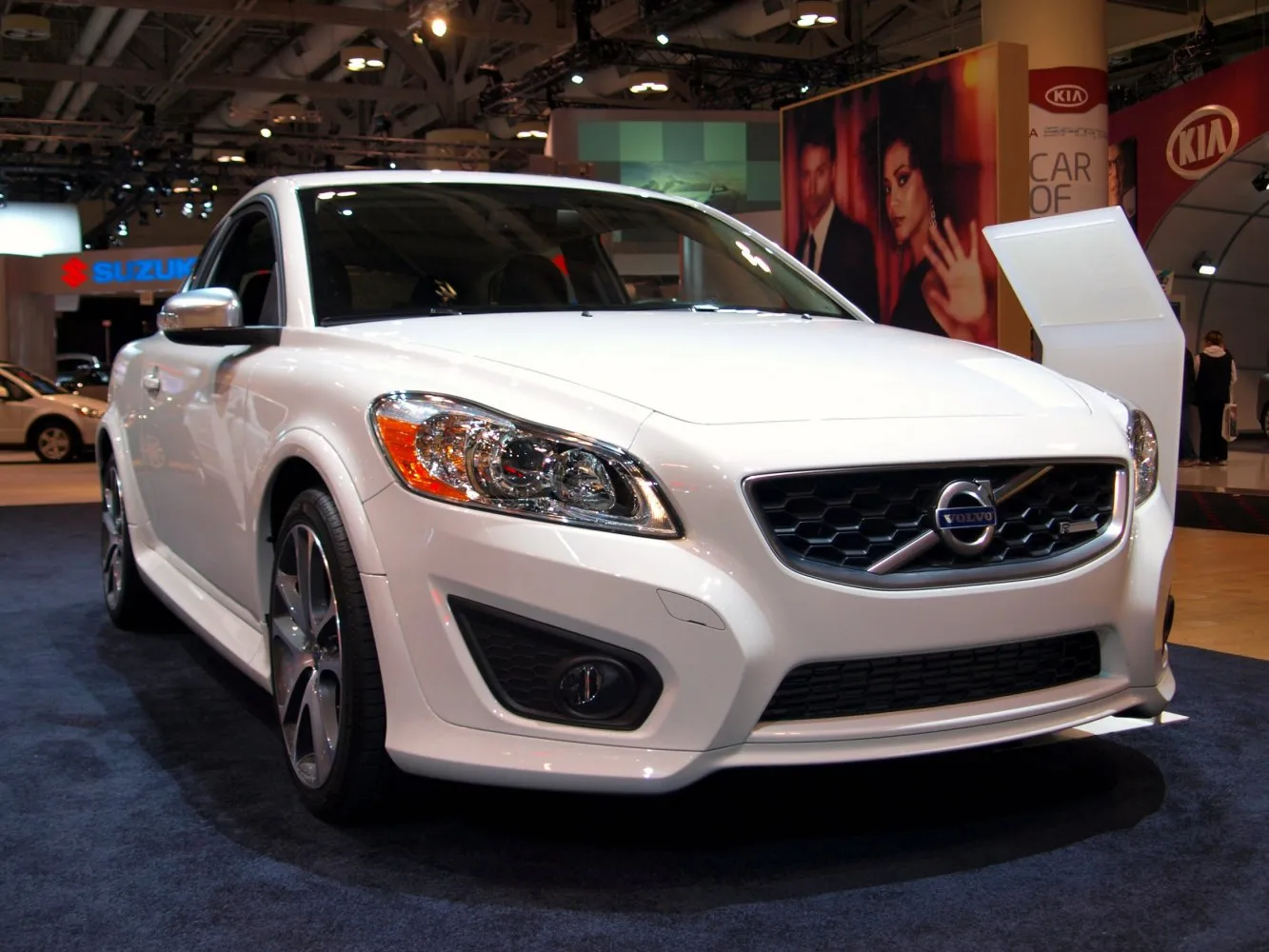
Volvo C30 facelift 2010 2.0 i 16V (145 Hp)
Overall Rating
Volvo C30:
The Volvo C30 is a three-door, front-engine, front-wheel-drive premium compact hatchback manufactured and marketed by Volvo Cars from 2006 to 2013, in a single generation. Powered by inline-four and straight-five engines, the C30 is a variant of the Volvo S40/V50/C70 range, sharing the same Ford C1/Volvo P1 platform. Volvo marketed the C30 as a premium hatchback / sports coupe.
The C30's rear styling and frameless glass rear hatch recall Volvo's earlier P1800 ES and Volvo 480.
The Volvo SCC is a concept vehicle incorporating the rear hatch design from the Volvo P1800ES and the glass hatch from Volvo 480ES. Its safety features included forward collision warning, blind spot monitor and alert, lane departure warning, adaptive cruise control, flashing brake lights during hard braking, and headlights that follow the curvature of the road as the car turns. Many of these features would become commonplace years later. The SCC also featured a head-up display and communication with the car via mobile phone....(Read more on Wikipedia)
facelift 2010 Overview:
Volvo C30 (facelift 2010). With 185 Nm of torque, it offers ample pulling power. It has moderate fuel consumption (~10.8 l/100km). With a weight of 1414 kg, it falls in the mid‑range. Front‑wheel drive delivers efficiency and easy handling. Acceleration is relatively slow (0–100 km/h in 9.4 s). The top speed reaches 210 km/h. A two-door car with a fixed roof, known for its sporty design and dynamic performance. Seating for 4 makes it ideal for daily use.
2.0 i 16V (145 Hp) Verdict:

Performance Verdict
Adequate performance for most daily driving scenarios, offering a good balance without being overly sporty.
Fuel Economy
Reasonable fuel economy for a naturally aspirated petrol engine of this size.
Pros and Cons:
Pros:
- • Distinctive and stylish design
- • High safety standards (5-star Euro NCAP)
- • Comfortable and supportive front seats
- • Quality interior materials and build
- • Wide range of capable and efficient engines (especially D3/D4 and T5)
- • Agile and composed handling for a compact car
Cons:
- • Limited rear passenger space, especially for adults
- • Small and somewhat impractical boot opening
- • Higher running costs for performance models (T5)
- • Some interior plastics could feel less premium than rivals
- • Not as practical as conventional hatchbacks
Specifications:
Specifications are compared to those of the previous generation(C30: 2008 - 2010).
| General: | |
|---|---|
| Brand: | Volvo |
| Model: | C30 |
| Generation: | facelift 2010 |
| Modification (Engine): | 2.0 i 16V (145 Hp) |
| Start of production: | 2010 |
| End of production: | 2013 |
| Powertrain Architecture: | Internal Combustion engine |
| Body type: | Coupe |
| Seats: | 4 |
| Doors: | 3 |
| Engine: | |
|---|---|
| Power: | 145 Hp @ 6000 rpm. Same horsepower |
| Power per litre: | 72.5 Hp/l [14mm more] |
| Torque: | 185 Nm @ 4500 rpm. |
| Engine Model/Code: | B4204S3 More details about the engine B4204S3 |
| Engine displacement: | 1999 |
| Number of cylinders: | 4 |
| Engine configuration: | Inline |
| Number of valves per cylinder: | 4 |
| Fuel injection system: | Multi-port manifold injection |
| Engine aspiration: | Naturally aspirated engine |
| Valvetrain: | DOHC |
| Engine oil capacity: | 4.3 l |
| Coolant: | 6.5 l |
| Engine layout: | Front, Transverse |
| Cylinder Bore: | 87.5 mm |
| Piston Stroke: | 83.1 mm |
| Compression ratio: | 10.8:1 |
| Performance: | |
|---|---|
| Fuel Type: | Petrol (Gasoline) |
| Fuel consumption (economy) - urban: | 10.8 l/100 km |
| Fuel consumption (economy) - extra urban: | 5.8 l/100 km |
| Fuel consumption (economy) - combined: | 7.6 l/100 km |
| Emission standard: | Euro 4 |
| Acceleration 0 - 100 km/h: | 9.4 sec |
| Acceleration 0 - 62 mph: | 9.4 sec |
| Maximum speed: | 210 km/h |
| Weight-to-power ratio: | 9.8 kg/Hp, 102.5 Hp/tonne |
| Weight-to-torque ratio: | 7.6 kg/Nm, 130.8 Nm/tonne |
| Acceleration 0 - 60 mph: | 8.9 sec |
| Space: | |
|---|---|
| Kerb Weight: | 1414 |
| Max. weight: | 1750 |
| Max load: | 336 |
| Trunk (boot) space - maximum: | 921 l |
| Trunk (boot) space - minimum: | 278 l |
| Permitted trailer load with brakes (12%): | 1350 kg |
| Fuel tank capacity: | 55 l |
| Permitted trailer load without brakes: | 700 kg |
| Permitted towbar download: | 75 kg |
| Size: | |
|---|---|
| Length: | 4266 mm [14mm more] |
| Width: | 1782 mm [Same width.] |
| Height: | 1447 mm [Same height.] |
| Wheelbase: | 2640 mm [Same wheelbase.] |
| Width including mirrors: | 2039 mm |
| Front track: | 1535 mm |
| Rear (Back) track: | 1531 mm |
| Minimum turning circle (turning diameter): | 10.6 m [above average] |
| Powertrain: | |
|---|---|
| Drivetrain Architecture | The Internal combustion engine (ICE) drives the front wheels of the vehicle. |
| Drive wheel | Front wheel drive |
| Number of gears | 5 |
| Transmission type | Manual |
| Front brakes | Ventilated discs [Best for performance and cooling.] |
| Rear brakes | Ventilated discs [Best for performance and cooling.] |
| Assisting systems | ABS (Anti-lock braking system) |
| Steering type | Steering rack and pinion |
| Tires size | 215/45 R18 |
| Wheel rims size | 18 |
| Front suspension | Spring Strut |
| Rear suspension | Transverse stabilizer |











Every driver has a story. What’s yours with the Volvo C30?