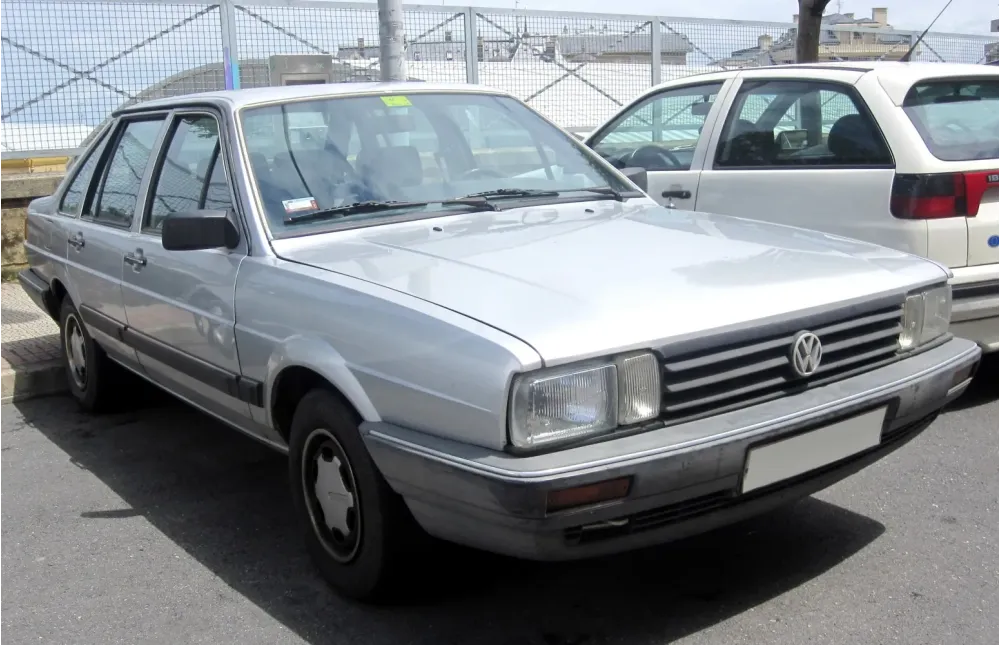
Click on image to view the full photo gallery
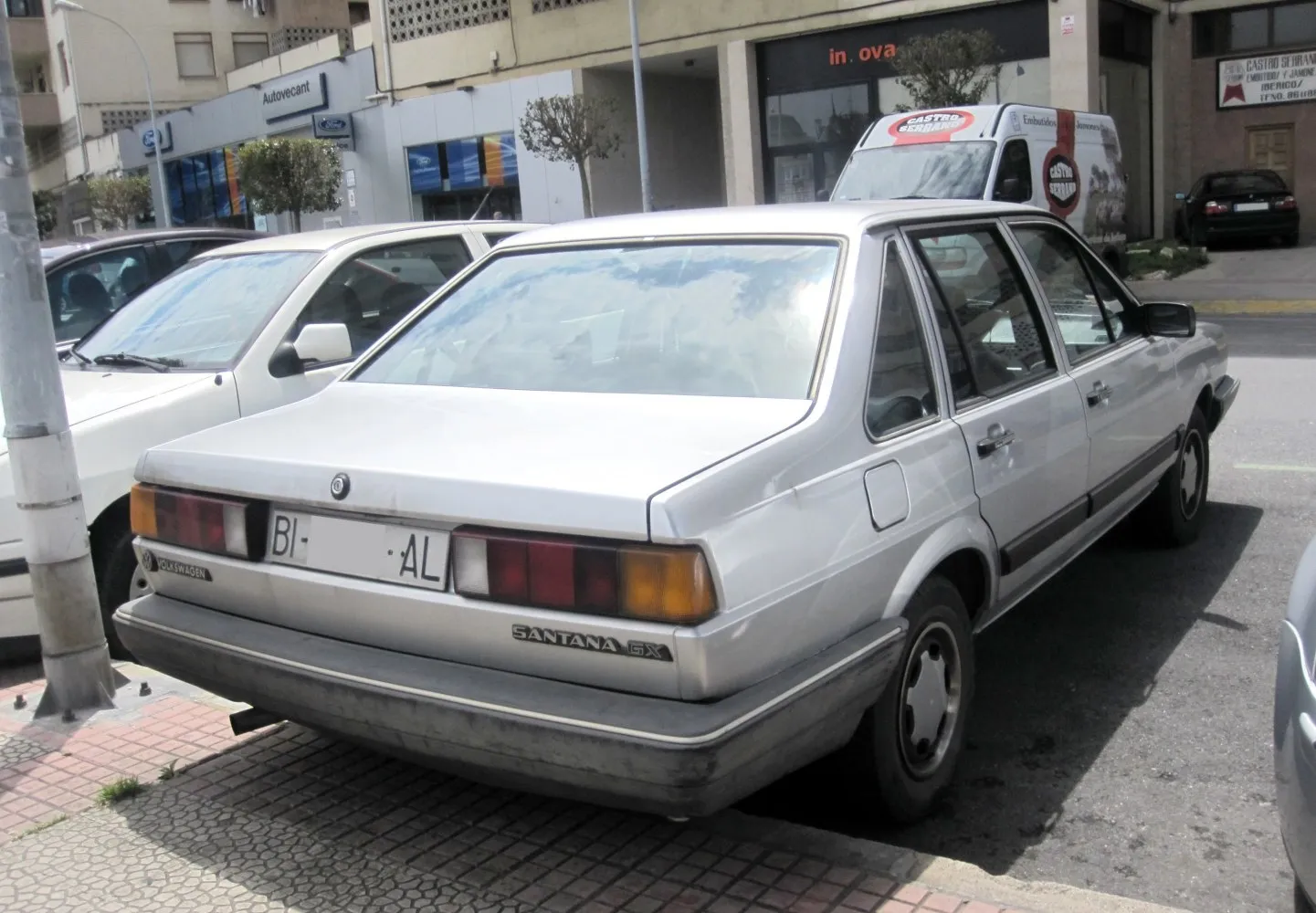
Volkswagen Santana 32B 1.6 D (54 Hp)
Overall Rating
Volkswagen Santana:
The Volkswagen Santana is a nameplate used by Volkswagen for various sedans and station wagons since 1983. The first generation is based on the second-generation Volkswagen Passat. It was introduced in 1981 while production started in 1983 for China. The use of the "Santana" badge rather than "Passat" echoes the use of different names for the sedan versions of the Polo and Golf.
In North America, it was also known as the Volkswagen Quantum. In Mexico, it was named the Volkswagen Corsar, while in Argentina it was sold as the Volkswagen Carat. In Brazil and other South American countries it was known as the Santana, while the Passat Variant B2 wagon was marketed as the Quantum. In Europe, the Santana name was dropped in 1985 and the car was sold as a Passat. European test production ended in 1988 while Latin American production continued until 2006. Chinese production of the three box sedan continued until January 2013....(Read more on Wikipedia)
32B Overview:
Volkswagen Santana (32B). With 104 Nm of torque, it offers ample pulling power. It has moderate fuel consumption (~7.1 l/100km). Weighing only 964 kg, it’s quite light. Front‑wheel drive delivers efficiency and easy handling. Acceleration is relatively slow (0–100 km/h in 20.5 s). A four-door car with a separate trunk, ideal for families and daily commuting. Seating for 5 makes it ideal for daily use.
The Volkswagen Santana 32B was produced before the establishment of modern crash testing protocols like Euro NCAP. Its safety features are rudimentary by contemporary standards, typical of early 1980s vehicle design.
1.6 D (54 Hp) Verdict:

Performance Verdict
The slowest option, with leisurely acceleration, best suited for drivers who prioritize economy and durability over speed.
Fuel Economy
Outstanding fuel economy, making it the most frugal choice for long-term running costs, despite its modest power.
Pros and Cons:
Pros:
- • Spacious and comfortable interior for its class
- • Robust and reliable mechanicals, especially the diesel engines
- • Good ride quality, well-suited for long journeys
- • Practical sedan body style with a large boot capacity
- • Wide range of engine options to suit different needs and budgets
Cons:
- • Dated safety features by modern standards
- • Some petrol engines can be quite thirsty
- • Exterior styling is conservative and lacks modern flair
- • Performance can be sluggish with smaller, naturally aspirated engines
- • Finding specific replacement parts might be challenging today due to age
Specifications:
Specifications are compared to those of the previous generation(32B: 1983 - 1988).
| General: | |
|---|---|
| Brand: | Volkswagen |
| Model: | Santana |
| Generation: | 32B |
| Modification (Engine): | 1.6 D (54 Hp) |
| Start of production: | August, 1982 |
| End of production: | December, 1984 |
| Powertrain Architecture: | Internal Combustion engine |
| Body type: | Sedan |
| Seats: | 5 |
| Doors: | 4 |
| Engine: | |
|---|---|
| Power: | 54 Hp @ 4800 rpm. Same horsepower |
| Power per litre: | 34 Hp/l [worst than previous generation] |
| Torque: | 104 Nm @ 2000 rpm. |
| Engine displacement: | 1588 |
| Number of cylinders: | 4 |
| Engine configuration: | Inline |
| Number of valves per cylinder: | 2 |
| Fuel injection system: | Precombustion chamber injection |
| Engine aspiration: | Naturally aspirated engine |
| Valvetrain: | SOHC |
| Engine oil capacity: | 3.5 l |
| Engine layout: | Front, Longitudinal |
| Cylinder Bore: | 76.5 mm mm |
| Piston Stroke: | 86.4 mm mm |
| Compression ratio: | 23:1 |
| Performance: | |
|---|---|
| Fuel Type: | Diesel |
| Fuel consumption (economy) - urban: | 7.1 l/100 km |
| Fuel consumption (economy) - extra urban: | 4.6 l/100 km |
| Acceleration 0 - 100 km/h: | 20.5 sec |
| Acceleration 0 - 62 mph: | 20.5 sec |
| Weight-to-power ratio: | 17.9 kg/Hp, 56 Hp/tonne |
| Weight-to-torque ratio: | 9.3 kg/Nm, 107.9 Nm/tonne |
| Acceleration 0 - 60 mph: | 19.5 sec |
| Space: | |
|---|---|
| Kerb Weight: | 964 |
| Max. weight: | 1460 |
| Max. roof load: | 75 kg |
| Max load: | 496 |
| Trunk (boot) space - minimum: | 535 l |
| Permitted trailer load with brakes (12%): | 1000 kg |
| Fuel tank capacity: | 60 l |
| Permitted trailer load without brakes: | 482 kg |
| Size: | |
|---|---|
| Length: | 4545 mm mm |
| Width: | 1695 mm mm |
| Height: | 1400 mm mm |
| Wheelbase: | 2550 mm mm |
| Front track: | 1400 mm |
| Rear (Back) track: | 1408 mm |
| Minimum turning circle (turning diameter): | 10.7 m [above average] |
| Powertrain: | |
|---|---|
| Drivetrain Architecture | The Internal combustion engine (ICE) drives the front wheels of the vehicle. |
| Drive wheel | Front wheel drive |
| Number of gears | 4 |
| Transmission type | Manual |
| Front brakes | Disc [bad for performance and cooling.] |
| Rear brakes | Drum [bad for performance and cooling.] |
| Steering type | Steering rack and pinion |
| Wheel rims size | 5.5J x 13 |
| Front suspension | Independent, type McPherson with coil spring and anti-roll bar |
| Rear suspension | Trailing arm |



Have you ever driven an Volkswagen Santana?
How was your experience with it? Share with us: