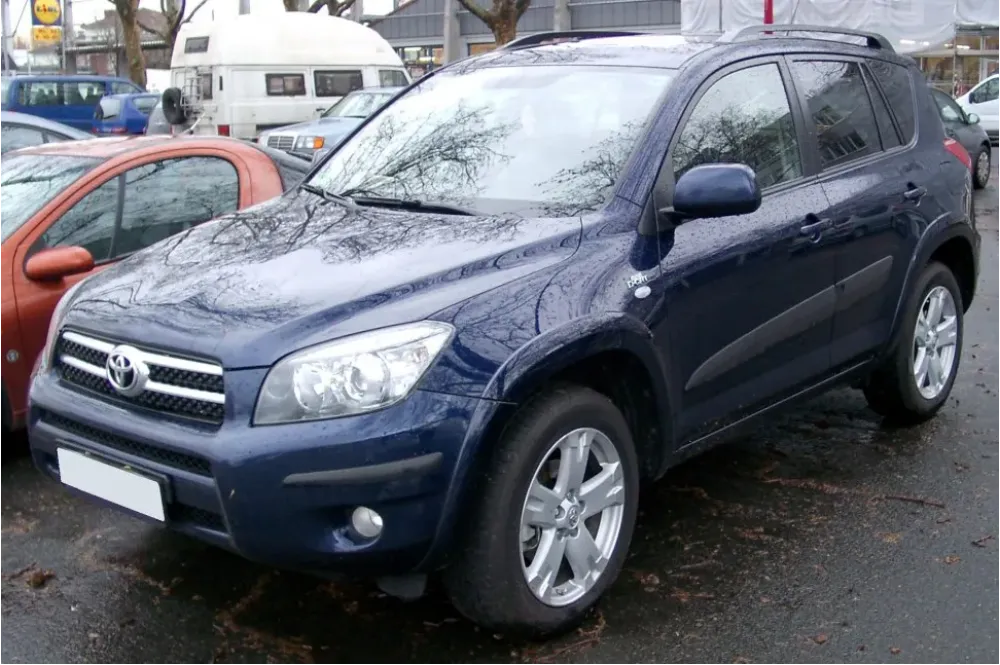
Click on image to view the full photo gallery
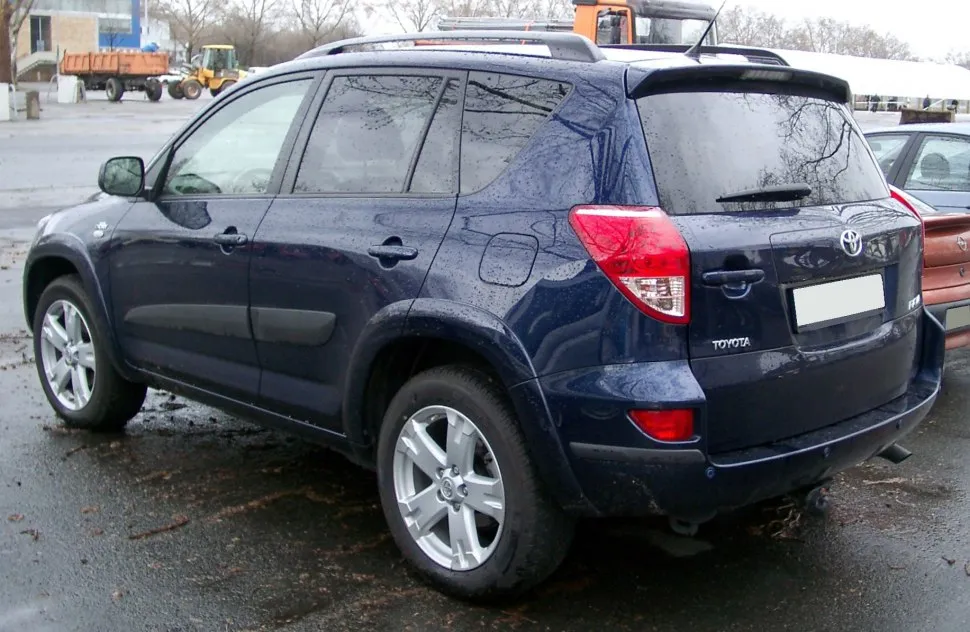
Toyota RAV4 III (XA30) 2.0 VVT-i (152 Hp) 4WD Automatic
Overall Rating
Toyota RAV4:
The Toyota RAV4 is a compact crossover SUV produced by the Japanese automobile manufacturer Toyota. It is known for starting the wave of compact crossovers. The RAV4 is the best-selling sport utility vehicle of all time, having sold over 10 million units by February 2020. In February 2025, the RAV4 replaced the Ford F-150 as the top selling car in the United States, after nearly four decades of the F-150's reign.
It made its debut in Japan and Europe in 1994, and in North America in 1995, being launched in January 1996. The vehicle was designed for consumers wanting a vehicle that had most of the benefits of SUVs, such as increased cargo room, higher visibility, and the option of full-time four-wheel drive, along with the maneuverability of a mid-size car. The vehicle's name is an abbreviation of "Recreational Active Vehicle with 4-wheel drive", or "Robust Accurate Vehicle with 4-wheel drive", although not all models come equipped with the four-wheel drive system....(Read more on Wikipedia)
III (XA30) Overview:
Toyota RAV4 (III (XA30)). With 194 Nm of torque, it offers ample pulling power. It has moderate fuel consumption (~11.6 l/100km). With a weight of 1505 kg, it falls in the mid‑range. All‑wheel drive provides excellent grip, ideal for off‑road use. Acceleration is relatively slow (0–100 km/h in 12 s). The top speed reaches 175 km/h. A sport utility vehicle offering higher ground clearance and versatile cargo space. Seating for 5 makes it ideal for daily use.
2.0 VVT-i (152 Hp) 4WD Automatic Verdict:

Performance Verdict
Performance is adequate for city driving but can feel sluggish on the highway, especially when paired with the automatic transmission, leading to slower acceleration.
Fuel Economy
The automatic gearbox contributes to higher fuel consumption (9 l/100 km combined), making it less economical than its manual counterpart or diesel options.
Pros and Cons:
Pros:
- • Excellent Toyota reliability and durability
- • Practical and spacious interior for its class
- • Capable 4WD system for varied conditions
- • Good fuel economy from diesel engines
- • Comfortable ride quality
Cons:
- • Some petrol engines can be thirsty, especially with automatic transmission
- • Interior plastics can feel dated compared to rivals
- • Automatic transmission can be sluggish
- • Limited off-road capability compared to more rugged SUVs
Specifications:
Specifications are compared to those of the previous generation(EV II (QEA38): May, 2012 - 2014).
| General: | |
|---|---|
| Brand: | Toyota |
| Model: | RAV4 |
| Generation: | III (XA30) |
| Modification (Engine): | 2.0 VVT-i (152 Hp) 4WD Automatic |
| Start of production: | November, 2005 |
| End of production: | 2009 |
| Powertrain Architecture: | Internal Combustion engine |
| Body type: | SUV |
| Seats: | 5 |
| Doors: | 5 |
| Engine: | |
|---|---|
| Power: | 152 Hp @ 6000 rpm. [0hp less] |
| Power per litre: | 76.1 Hp/l [worst than previous generation] |
| Torque: | 194 Nm @ 4000 rpm. |
| Engine Model/Code: | 3ZR-FAE More details about the engine 3ZR-FAE |
| Engine displacement: | 1998 |
| Number of cylinders: | 4 |
| Engine configuration: | Inline |
| Number of valves per cylinder: | 4 |
| Fuel injection system: | Multi-port manifold injection |
| Engine aspiration: | Naturally aspirated engine |
| Valvetrain: | DOHC, VVT-i |
| Engine oil capacity: | 4.2 l |
| Engine layout: | Front, Transverse |
| Cylinder Bore: | 86 mm |
| Piston Stroke: | 86 mm |
| Compression ratio: | 9.8:1 |
| Performance: | |
|---|---|
| Fuel Type: | Petrol (Gasoline) |
| Fuel consumption (economy) - urban: | 11.6 l/100 km |
| Fuel consumption (economy) - extra urban: | 7.4 l/100 km |
| Fuel consumption (economy) - combined: | 9 l/100 km |
| Emission standard: | Euro 4 |
| Acceleration 0 - 100 km/h: | 12 sec |
| Acceleration 0 - 62 mph: | 12 sec |
| Maximum speed: | 175 km/h |
| Weight-to-power ratio: | 9.9 kg/Hp, 101 Hp/tonne |
| Weight-to-torque ratio: | 7.8 kg/Nm, 128.9 Nm/tonne |
| Acceleration 0 - 60 mph: | 11.4 sec |
| Space: | |
|---|---|
| Kerb Weight: | 1505 |
| Max. weight: | 2110 |
| Max load: | 605 |
| Trunk (boot) space - minimum: | 586 l |
| Permitted trailer load with brakes (12%): | 1500 kg |
| Fuel tank capacity: | 60 l |
| Permitted trailer load without brakes: | 750 kg |
| Size: | |
|---|---|
| Ramp-over (brakeover) angle: | 20° |
| Length: | 4315-4395 mm [260mm less] |
| Width: | 1815 mm [1mm less] |
| Height: | 1685-1720 mm [1mm more] |
| Wheelbase: | 2560 mm [99mm less] |
| Front track: | 1560 mm |
| Rear (Back) track: | 1560 mm |
| Front overhang: | 860 mm |
| Rear overhang: | 895-975 mm |
| Ride height (ground clearance): | 180 mm |
| Minimum turning circle (turning diameter): | 10.2 m [above average] |
| Approach angle: | 28° |
| Departure angle: | 24° |
| Powertrain: | |
|---|---|
| Drive wheel | All wheel drive (4x4) |
| Number of gears | 4 |
| Transmission type | Automatic |
| Front brakes | Ventilated discs, 296 mm [Best for performance and cooling.] |
| Rear brakes | Disc, 281 mm [above average] |
| Assisting systems | ABS (Anti-lock braking system) |
| Steering type | Steering rack and pinion |
| Tires size | 215/70 R16 |
| Wheel rims size | 6.5J x 16 |
| Front suspension | Independent type McPherson |
| Rear suspension | Double wishbone |


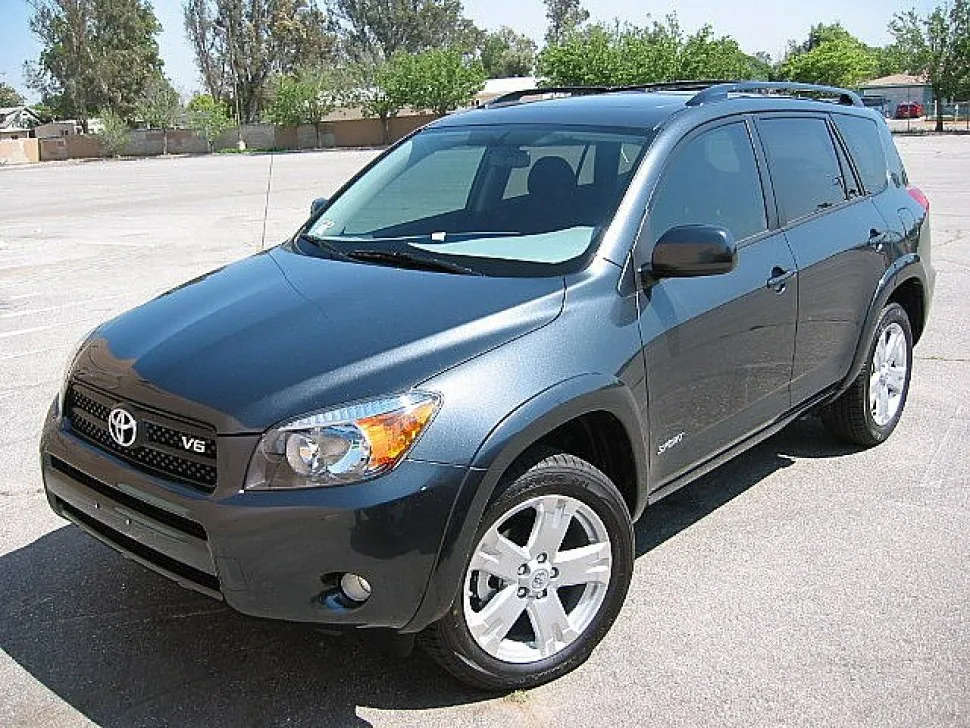








Fuel, speed, and comfort: How does the Toyota RAV4 rank in your book?