
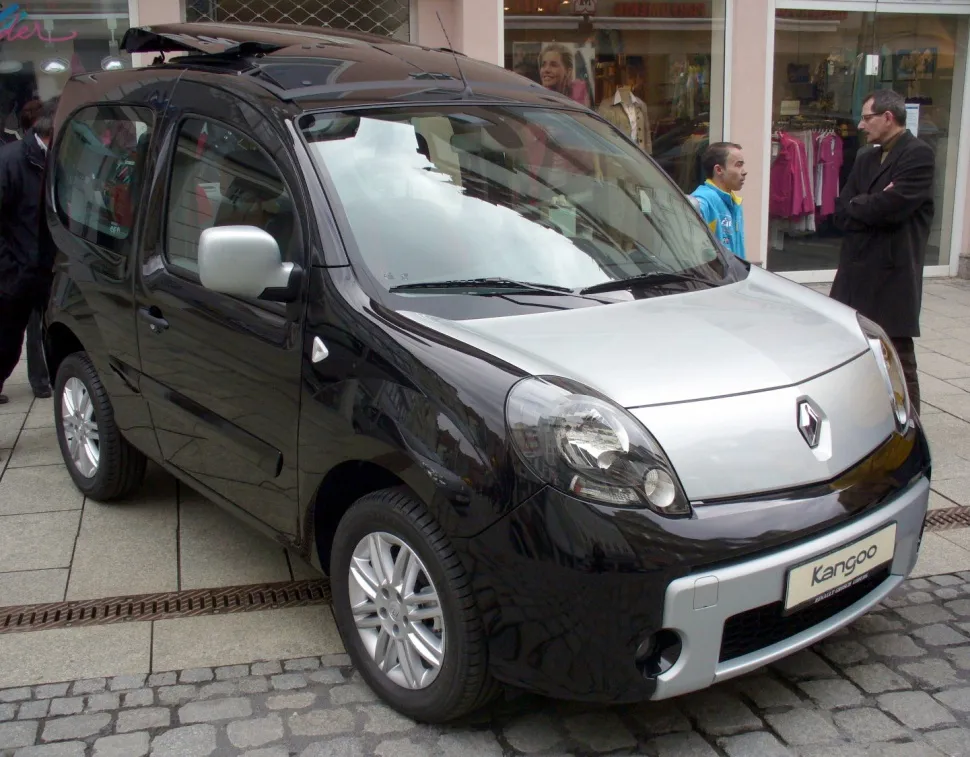
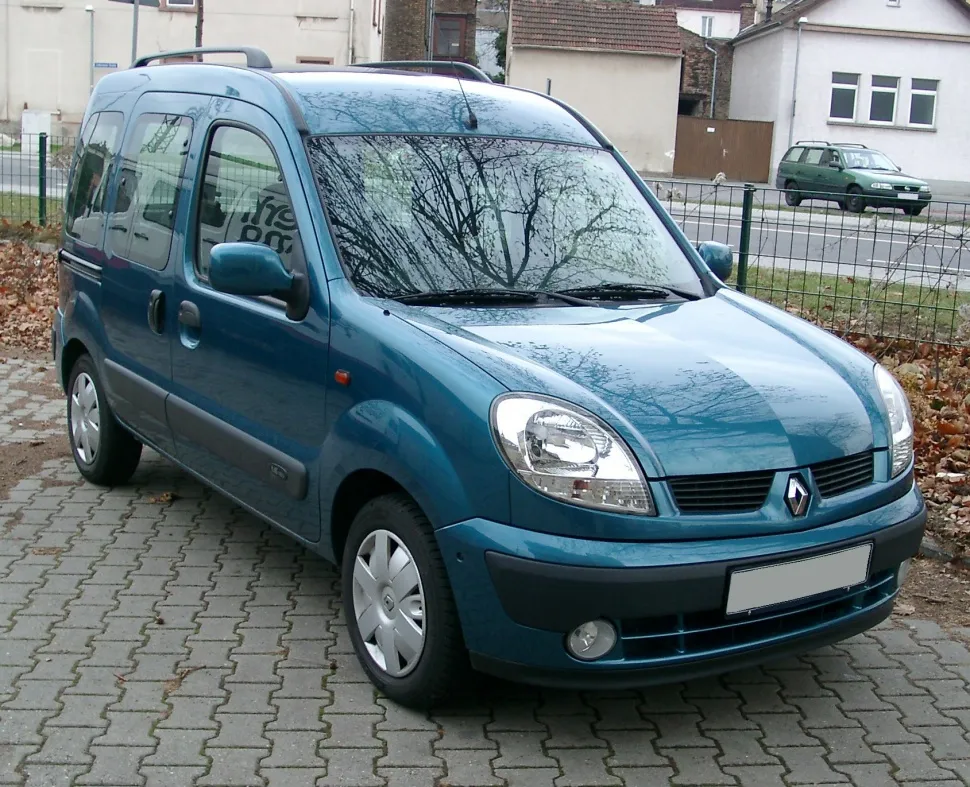
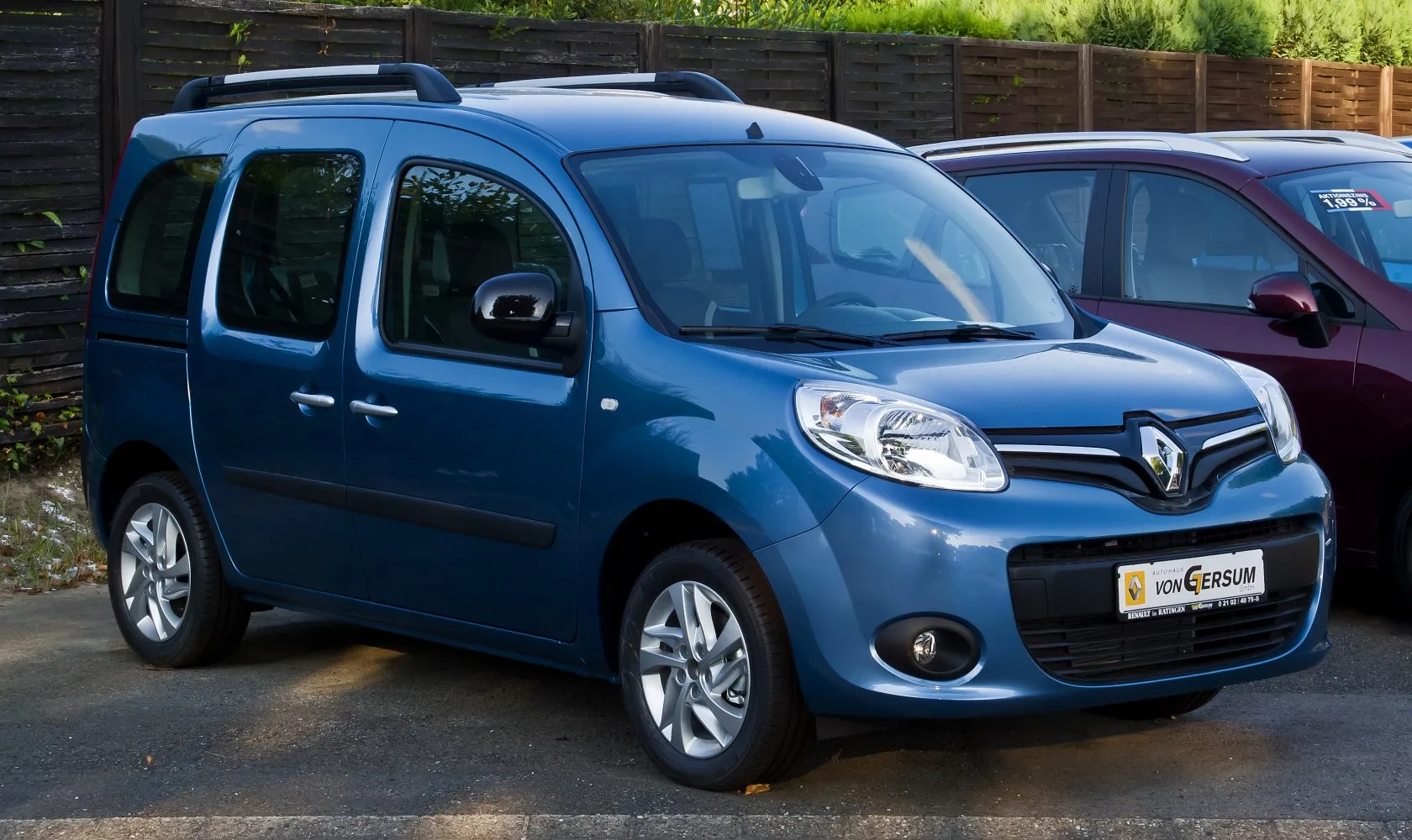
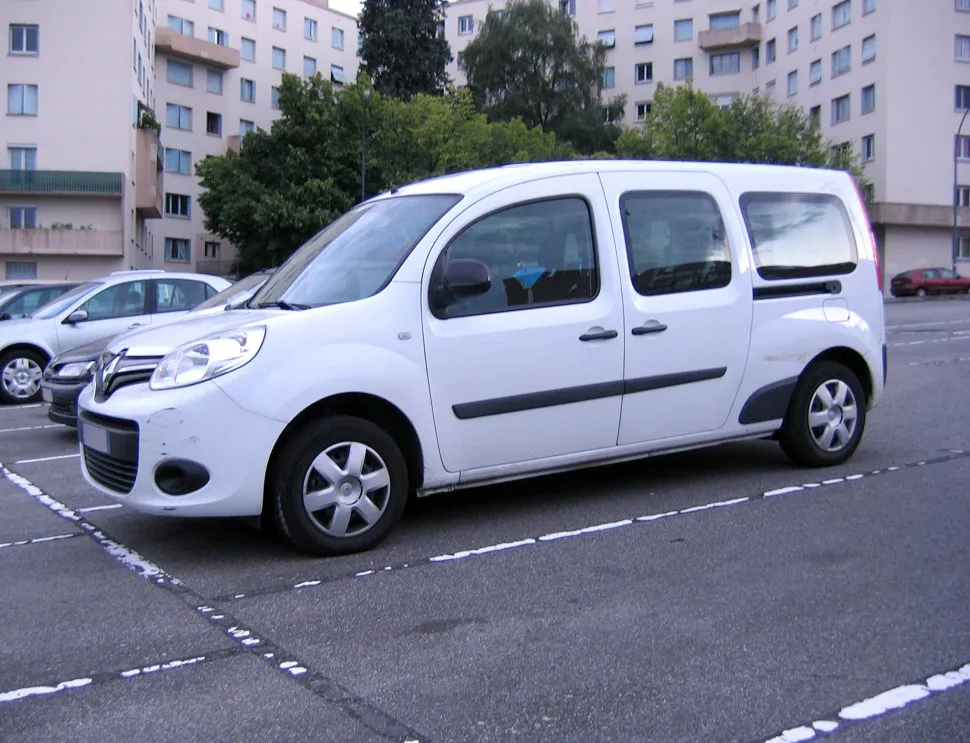
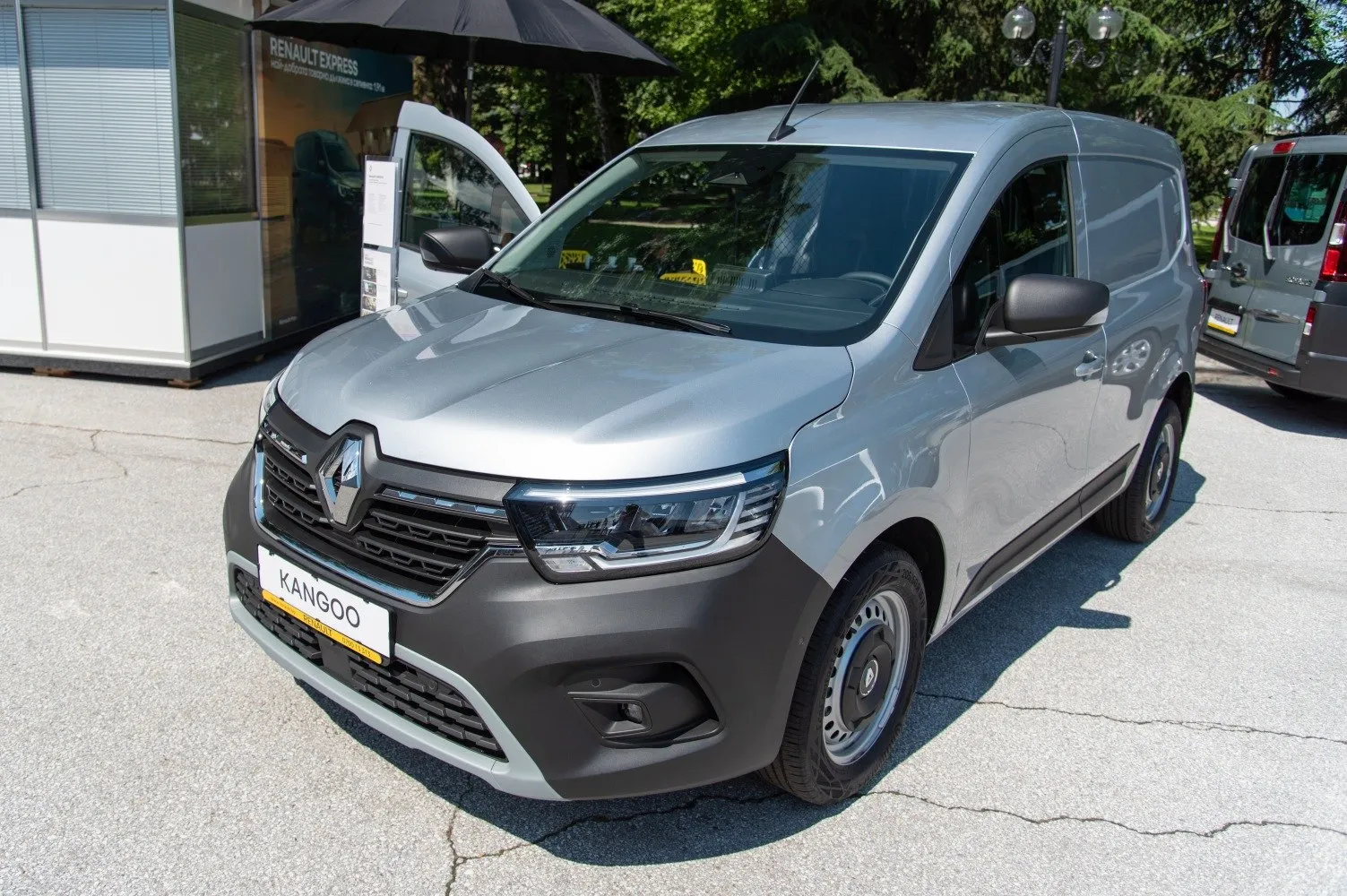
Click on image to view the full photo gallery
Renault Kangoo I Express (FC, facelift 2003) 1.2 (58 Hp)
Overall Rating
Renault Kangoo:
The Renault Kangoo is a family of vans built by Renault since 1997 across three generations. It is sold as a passenger multi-purpose vehicle or as a light commercial vehicle. For the European market, the Kangoo is manufactured at the MCA plant in Maubeuge, France.
The Kangoo was also marketed as a rebadged variant by Nissan in Europe as the Nissan Kubistar , Nissan NV250 and Nissan Townstar. In September 2012, Mercedes-Benz began marketing a rebadged variant of the second generation Kangoo as the Mercedes-Benz Citan, which is also marketed as Mercedes EQT and Mercedes T-Class for the current generation....(Read more on Wikipedia)
I Express (FC, facelift 2003) Overview:
Renault Kangoo (I Express (FC, facelift 2003)). With 93 Nm of torque, it offers ample pulling power. It has moderate fuel consumption (~8.3 l/100km). Weighing only 1010 kg, it’s quite light. Front‑wheel drive delivers efficiency and easy handling. Acceleration is relatively slow (0–100 km/h in 18.9 s). The top speed reaches 140 km/h. A spacious vehicle designed to transport passengers comfortably, often with sliding doors. Seating for 2 makes it ideal for daily use.
1.2 (58 Hp) Verdict:

Performance Verdict
Very basic and underpowered, suitable only for light city duties and short distances without significant loads.
Fuel Economy
Moderate fuel consumption for a small petrol engine, but less efficient than the diesels for longer runs.
Pros and Cons:
Pros:
- • Highly versatile and practical interior with generous cargo space
- • Economical diesel engine options (especially 1.5 dCi)
- • Convenient sliding rear doors for easy access in tight spaces
- • Affordable to buy and run, offering excellent value for money
- • Robust build quality suitable for utility and light commercial use
Cons:
- • Basic interior quality and materials, lacking refinement
- • Limited safety features by modern standards (2-star Euro NCAP)
- • Some engines, particularly the lower-powered petrols and diesels, can feel underpowered
- • Ride comfort can be unrefined, especially when unladen
- • Older diesel engines may have specific maintenance considerations
Specifications:
Specifications are compared to those of the previous generation(I Express (FC): 2002 - 2003).
| General: | |
|---|---|
| Brand: | Renault |
| Model: | Kangoo |
| Generation: | I Express (FC, facelift 2003) |
| Modification (Engine): | 1.2 (58 Hp) |
| Start of production: | 2003 |
| End of production: | 2005 |
| Powertrain Architecture: | Internal Combustion engine |
| Body type: | Minivan |
| Seats: | 2 |
| Doors: | 3/4 |
| Engine: | |
|---|---|
| Power: | 58 Hp @ 5250 rpm. Same horsepower |
| Power per litre: | 50.5 Hp/l [40mm more] |
| Torque: | 93 Nm @ 2500 rpm. |
| Engine Model/Code: | D7F More details about the engine D7F |
| Engine displacement: | 1149 |
| Number of cylinders: | 4 |
| Engine configuration: | Inline |
| Number of valves per cylinder: | 2 |
| Fuel injection system: | Multi-port manifold injection |
| Engine aspiration: | Naturally aspirated engine |
| Engine oil capacity: | 4 l |
| Engine layout: | Front, Transverse |
| Cylinder Bore: | 69 mm mm |
| Piston Stroke: | 76.8 mm mm |
| Compression ratio: | 9.6:1 |
| Performance: | |
|---|---|
| Fuel Type: | Petrol (Gasoline) |
| Fuel consumption (economy) - urban: | 8.3 l/100 km |
| Fuel consumption (economy) - extra urban: | 6.1 l/100 km |
| Fuel consumption (economy) - combined: | 6.9 l/100 km |
| Emission standard: | Euro 3 |
| Acceleration 0 - 100 km/h: | 18.9 sec |
| Acceleration 0 - 62 mph: | 18.9 sec |
| Maximum speed: | 140 km/h |
| Weight-to-power ratio: | 17.4 kg/Hp, 57.4 Hp/tonne |
| Weight-to-torque ratio: | 10.9 kg/Nm, 92.1 Nm/tonne |
| Acceleration 0 - 60 mph: | 18 sec |
| Space: | |
|---|---|
| Kerb Weight: | 1010 |
| Max. weight: | 1615 |
| Max. roof load: | 100 kg |
| Max load: | 605 |
| Trunk (boot) space - maximum: | 3000 l |
| Permitted trailer load with brakes (12%): | 765 kg |
| Fuel tank capacity: | 50 l |
| Permitted trailer load without brakes: | 505 kg |
| Permitted towbar download: | 75 kg |
| Size: | |
|---|---|
| Length: | 4035 mm mm [40mm more] |
| Width: | 1672 mm mm [9mm more] |
| Height: | 1835 mm mm [8mm more] |
| Wheelbase: | 2605 mm mm [5mm more] |
| Width including mirrors: | 2031 mm |
| Front track: | 1405 mm |
| Rear (Back) track: | 1410 mm |
| Front overhang: | 730 mm |
| Rear overhang: | 700 mm |
| Minimum turning circle (turning diameter): | 10.79 m [above average] |
| Powertrain: | |
|---|---|
| Drivetrain Architecture | The Internal combustion engine (ICE) drives the front wheels of the vehicle. |
| Drive wheel | Front wheel drive |
| Number of gears | 5 |
| Transmission type | Manual |
| Front brakes | Ventilated discs [Best for performance and cooling.] |
| Rear brakes | Drum [bad for performance and cooling.] |
| Steering type | Steering rack and pinion |
| Tires size | 165/70 R14 C |
| Wheel rims size | 5.5J x 14 |
| Front suspension | Independent type McPherson |
| Rear suspension | Coil spring |














Does the Renault Kangoo live up to the hype? Give us your verdict!