
Click on image to view the full photo gallery
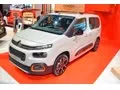
Peugeot Partner I (Phase II, 2002) 2.0 HDi (90 Hp)
Overall Rating
Peugeot Partner:
The Citroën Berlingo and Peugeot Partner are a range of minivans produced since 1996 and marketed under the Citroën and Peugeot marque. They are sold as light commercial vehicles or as a passenger multi-purpose-vehicle variant with rear seats and windows. They were initially a product of the French PSA Group, which later became part of the multinational Stellantis conglomerate. The third generation has also been sold under the Opel and Vauxhall Motors marques as the Combo, by Toyota as the Proace City from 2019, and by Fiat as the Doblò from 2022....(Read more on Wikipedia)
I (Phase II, 2002) Overview:
Peugeot Partner (I (Phase II, 2002)). With 205 Nm of torque, it offers ample pulling power. It has moderate fuel consumption (~7.3 l/100km). With a weight of 1310 kg, it falls in the mid‑range. Front‑wheel drive delivers efficiency and easy handling. Acceleration is relatively slow (0–100 km/h in 15.6 s). The top speed reaches 160 km/h. A spacious vehicle designed to transport passengers comfortably, often with sliding doors. Seating for 5 makes it ideal for daily use.
2.0 HDi (90 Hp) Verdict:

Performance Verdict
Offers adequate power for daily driving and light hauling, with decent low-end torque characteristic of HDi engines.
Fuel Economy
Good fuel efficiency for a vehicle of its class and era, making it economical for longer journeys.
Pros and Cons:
Pros:
- • Spacious and practical interior
- • Excellent fuel economy on HDi diesel engines
- • Versatile for both family and commercial use
- • Robust and reliable powertrain options (HDi)
- • Good cargo capacity
Cons:
- • Basic interior quality
- • Limited safety features compared to modern vehicles
- • Underpowered base petrol and non-turbo diesel engines
- • Ride comfort can be firm when unladen
- • Outdated design and technology
Specifications:
Specifications are compared to those of the previous generation(I (Phase I): 1999 - 2000).
| General: | |
|---|---|
| Brand: | Peugeot |
| Model: | Partner |
| Generation: | I (Phase II, 2002) |
| Modification (Engine): | 2.0 HDi (90 Hp) |
| Start of production: | 2002 |
| End of production: | 2006 |
| Powertrain Architecture: | Internal Combustion engine |
| Body type: | Minivan |
| Seats: | 5 |
| Doors: | 5 |
| Engine: | |
|---|---|
| Power: | 90 Hp @ 4000 rpm. Same horsepower |
| Power per litre: | 45.1 Hp/l [32mm more] |
| Torque: | 205 Nm @ 2000 rpm. |
| Engine Model/Code: | RHY DW10TD More details about the engine RHY DW10TD |
| Engine displacement: | 1997 |
| Number of cylinders: | 4 |
| Engine configuration: | Inline |
| Number of valves per cylinder: | 2 |
| Fuel injection system: | Diesel Commonrail |
| Engine aspiration: | Turbocharger, Intercooler |
| Valvetrain: | DOHC |
| Engine oil capacity: | 4.25 l |
| Coolant: | 9 l |
| Engine layout: | Front, Transverse |
| Cylinder Bore: | 85 mm mm |
| Piston Stroke: | 88 mm mm |
| Compression ratio: | 18:1 |
| Performance: | |
|---|---|
| Fuel Type: | Diesel |
| Fuel consumption (economy) - urban: | 7.3 l/100 km |
| Fuel consumption (economy) - extra urban: | 5 l/100 km |
| Fuel consumption (economy) - combined: | 5.8 l/100 km |
| Emission standard: | Euro 4 |
| Acceleration 0 - 100 km/h: | 15.6 sec |
| Acceleration 0 - 62 mph: | 15.6 sec |
| Maximum speed: | 160 km/h |
| Weight-to-power ratio: | 14.6 kg/Hp, 68.7 Hp/tonne |
| Weight-to-torque ratio: | 6.4 kg/Nm, 156.5 Nm/tonne |
| Acceleration 0 - 60 mph: | 14.8 sec |
| Space: | |
|---|---|
| Kerb Weight: | 1310 |
| Max. weight: | 1920 |
| Max load: | 610 |
| Trunk (boot) space - maximum: | 2800 l |
| Trunk (boot) space - minimum: | 625 l |
| Fuel tank capacity: | 60 l |
| Size: | |
|---|---|
| Length: | 4140 mm mm [32mm more] |
| Width: | 1720 mm mm [1mm more] |
| Height: | 1810 mm mm [105mm less] |
| Wheelbase: | 2690 mm mm [15mm less] |
| Front track: | 1420 mm |
| Rear (Back) track: | 1440 mm |
| Minimum turning circle (turning diameter): | 11 m [above average] |
| Powertrain: | |
|---|---|
| Drivetrain Architecture | The Internal combustion engine (ICE) drives the front wheels of the vehicle. |
| Drive wheel | Front wheel drive |
| Number of gears | 5 |
| Transmission type | Manual |
| Front brakes | Disc [bad for performance and cooling.] |
| Rear brakes | Drum [bad for performance and cooling.] |
| Assisting systems | ABS (Anti-lock braking system) |
| Steering type | Steering rack and pinion |
| Power steering | Hydraulic Steering |
| Tires size | 185/65 R15 |
| Front suspension | Independent type McPherson |
| Rear suspension | independent torsion suspension |






Fuel, speed, and comfort: How does the Peugeot Partner rank in your book?