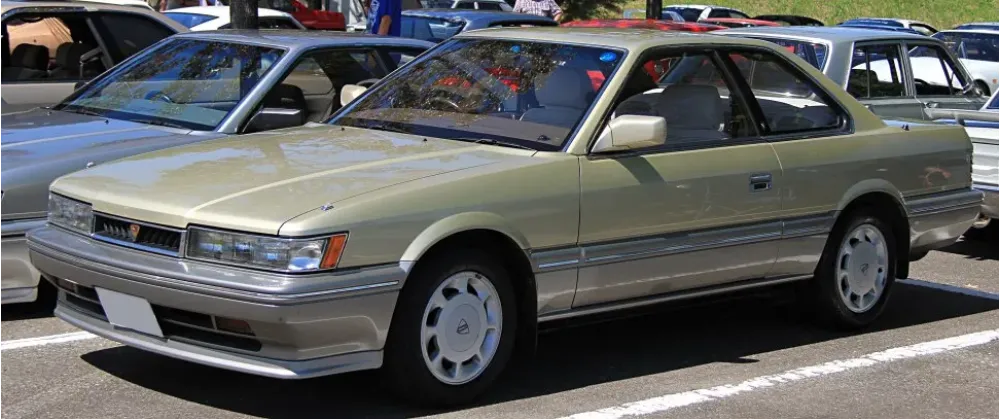
Click on image to view the full photo gallery
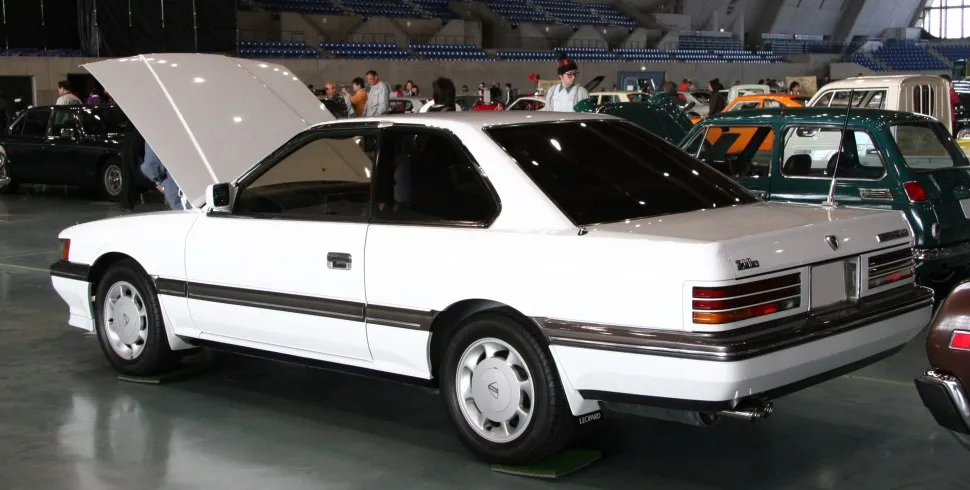
Nissan Leopard F31 2.0 24V (210 Hp)
Overall Rating
Nissan Leopard:
The Nissan Leopard is a line of sport/luxury cars built by Japanese carmaker Nissan from 1980 to 2000. The Leopard were initially based on the Japanese market Nissan Skyline and Nissan Laurel, then later based on the chassis of their Nissan Cedric and Nissan Gloria contemporaries and were rear wheel drive. Final versions were the contributing factors to Nissan's Infiniti M and J products.
The Leopard coupe and sedan were sold exclusively in Japan at Nissan Store locations as a companion to the Fairlady Z, allowing Nissan to sell a badge engineered version of the Skyline and Laurel. The Leopard was cancelled as a result of the Nissan Revival Plan, a casualty of overproduction. It was succeeded by the Nissan Fuga....(Read more on Wikipedia)
F31 Overview:
Nissan Leopard (F31). With 265 Nm of torque, it offers ample pulling power. With a weight of 1440 kg, it falls in the mid‑range. Rear‑wheel drive offers dynamic handling and sporty feedback. The top speed reaches 230 km/h. A two-door car with a fixed roof, known for its sporty design and dynamic performance. Seating for 5 makes it ideal for daily use.
The Nissan Leopard F31 was produced before Euro NCAP testing began in 1997. As such, no official Euro NCAP rating is available. Safety features are typical for vehicles of its era, focusing on passive restraints rather than modern active safety systems.
2.0 24V (210 Hp) Verdict:

Performance Verdict
A highly impressive engine for its displacement, this turbocharged 2.0L V6 delivers strong, responsive power, providing a sporty and engaging driving experience.
Fuel Economy
While powerful, its fuel economy is considerably better than the 3.0L turbo, offering a good balance between performance and running costs for a period performance car.
Pros and Cons:
Pros:
- • Distinctive JDM styling and presence
- • Powerful turbocharged V6 engine options
- • Comfortable and well-appointed interior for its era
- • Smooth ride quality, ideal for cruising
- • Strong enthusiast following and classic appeal
Cons:
- • High fuel consumption, especially on performance trims
- • Parts availability can be challenging outside Japan
- • Dated safety features compared to modern vehicles
- • Handling can feel less precise than European rivals
- • Rust can be an issue on neglected examples
Specifications:
| General: | |
|---|---|
| Brand: | Nissan |
| Model: | Leopard |
| Generation: | F31 |
| Modification (Engine): | 2.0 24V (210 Hp) |
| Start of production: | 1986 |
| End of production: | 1992 |
| Powertrain Architecture: | Internal Combustion engine |
| Body type: | Coupe |
| Seats: | 5 |
| Doors: | 2 |
| Engine: | |
|---|---|
| Power: | 210 Hp @ 6800 rpm. |
| Power per litre: | 105.1 Hp/l |
| Torque: | 265 Nm @ 3600 rpm. |
| Engine displacement: | 1998 |
| Number of cylinders: | 6 |
| Engine configuration: | V-engine |
| Number of valves per cylinder: | 4 |
| Fuel injection system: | Multi-port manifold injection |
| Engine aspiration: | Naturally aspirated engine |
| Valvetrain: | DOHC |
| Engine layout: | Front, Longitudinal |
| Cylinder Bore: | 78 mm mm |
| Piston Stroke: | 69.7 mm mm |
| Compression ratio: | 8.5:1 |
| Performance: | |
|---|---|
| Fuel Type: | Petrol (Gasoline) |
| Fuel consumption (economy) - urban: | 17 l/100 km |
| Fuel consumption (economy) - extra urban: | 11 l/100 km |
| Maximum speed: | 230 km/h |
| Weight-to-power ratio: | 6.9 kg/Hp, 145.8 Hp/tonne |
| Weight-to-torque ratio: | 5.4 kg/Nm, 184 Nm/tonne |
| Space: | |
|---|---|
| Kerb Weight: | 1440 |
| Fuel tank capacity: | 65 l |
| Size: | |
|---|---|
| Length: | 4695 mm mm |
| Width: | 1690 mm mm |
| Height: | 1370 mm mm |
| Wheelbase: | 2615 mm mm |
| Front track: | 1425 mm |
| Rear (Back) track: | 1425 mm |
| Powertrain: | |
|---|---|
| Drivetrain Architecture | The Internal combustion engine (ICE) drives the rear wheels of the vehicle. |
| Drive wheel | Rear wheel drive |
| Front brakes | Ventilated discs |
| Rear brakes | Ventilated discs |
| Assisting systems | ABS (Anti-lock braking system) |
| Steering type | Steering rack and pinion |
| Power steering | Hydraulic Steering |
| Tires size | 215/60 R15 |
| Front suspension | Wishbone |
| Rear suspension | Coil spring |





Fuel, speed, and comfort: How does the Nissan Leopard rank in your book?