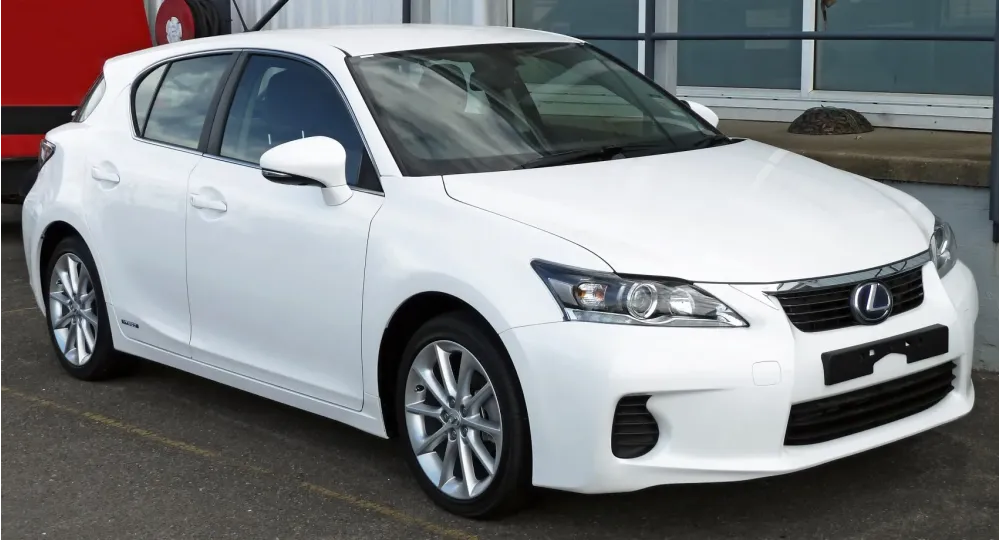
Click on image to view the full photo gallery
Lexus CT I 200h (136 Hp) Hybrid e-CVT
Overall Rating
Lexus CT:
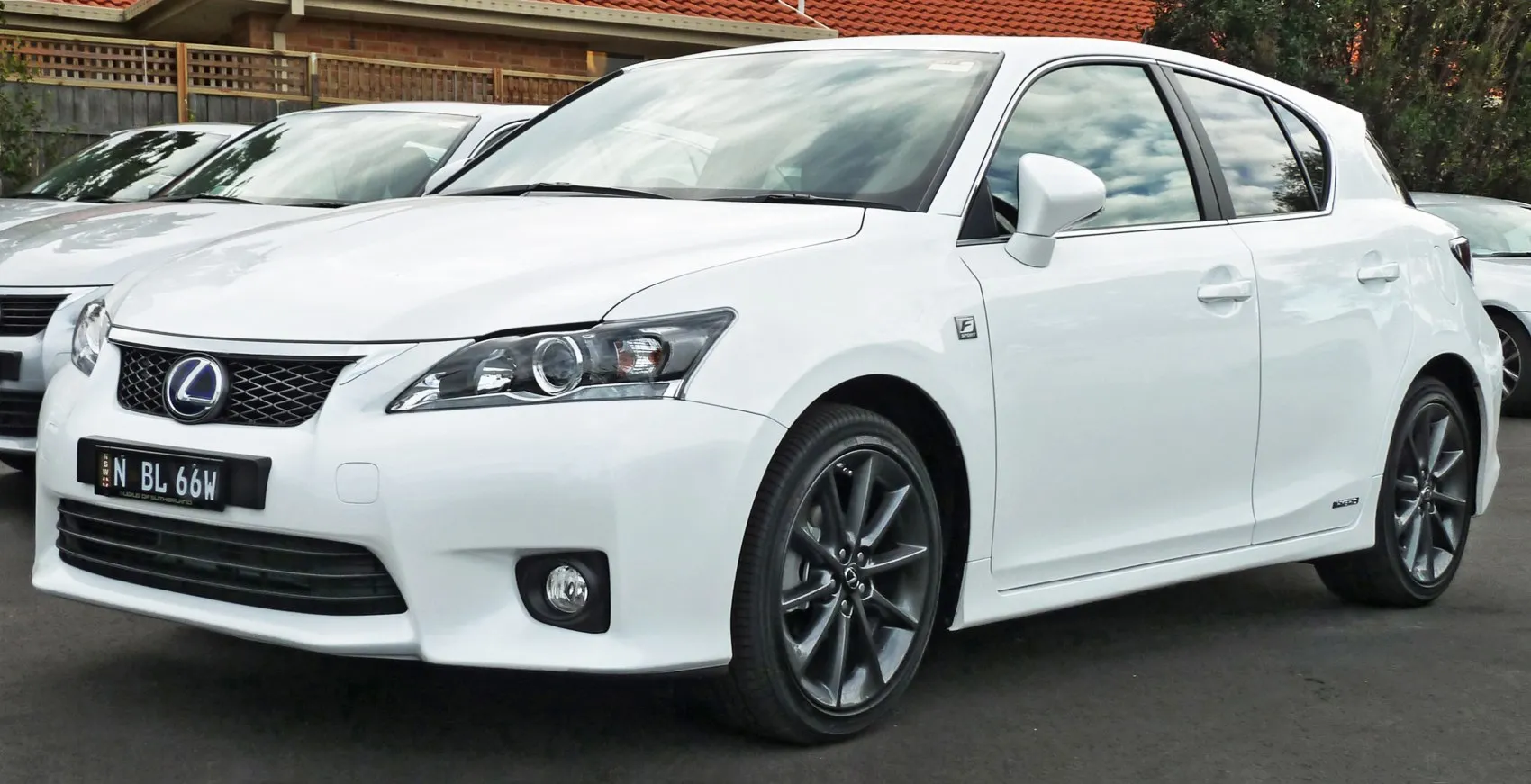
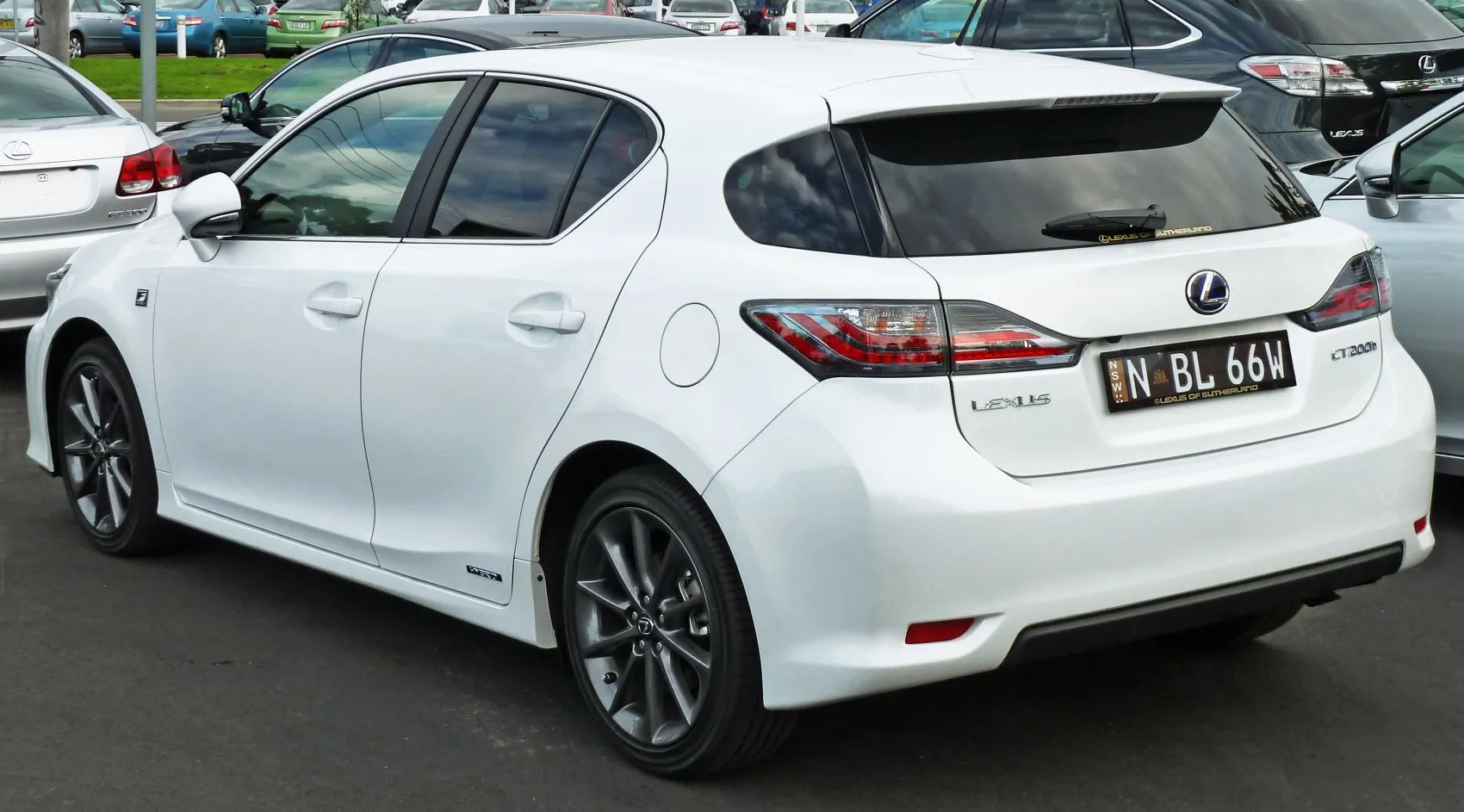
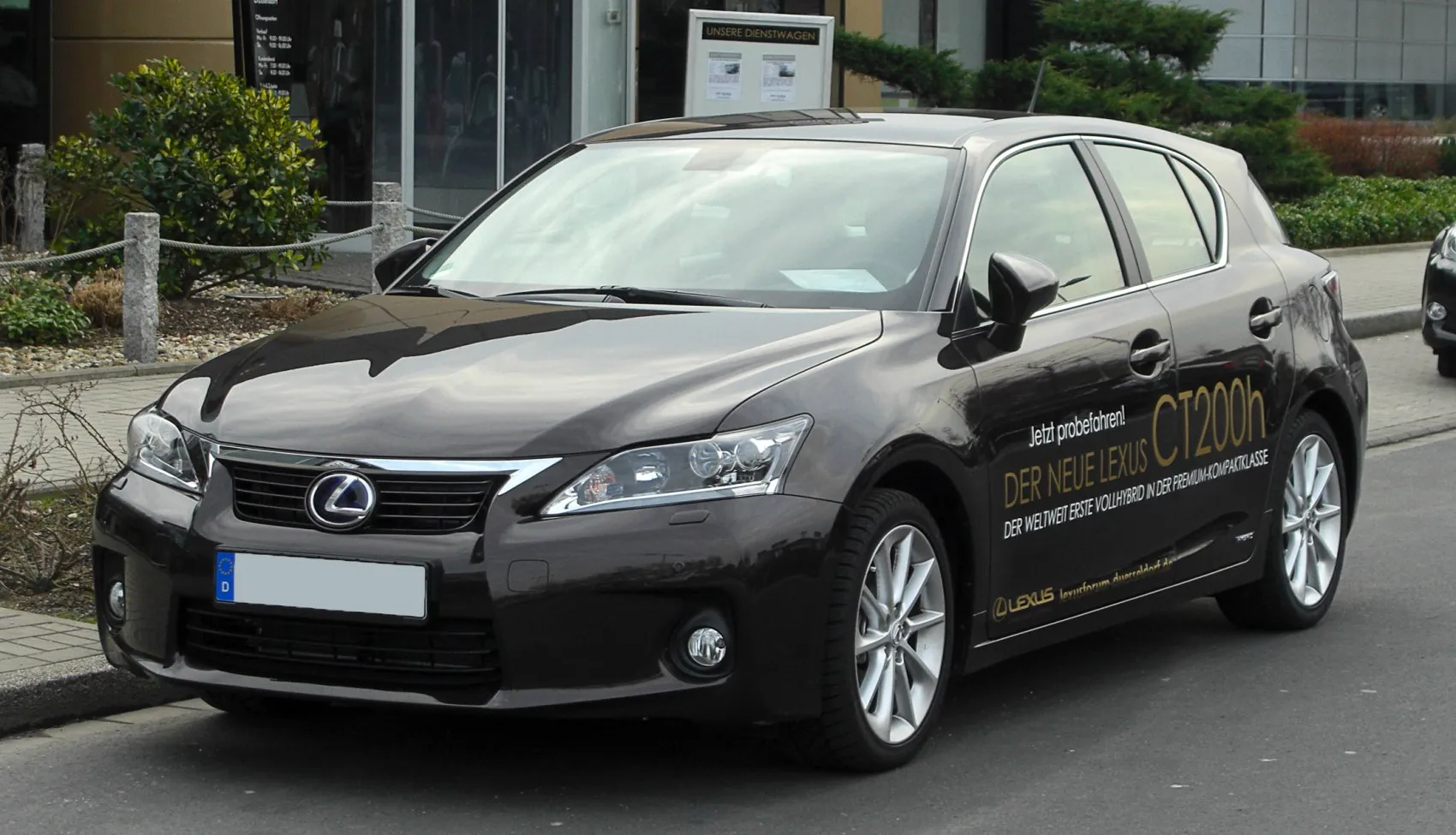
The Lexus CT is a hybrid electric automobile sold by Lexus, a luxury division of Toyota, as a premium compact hatchback. The CT, consisting of a single model called the CT 200h, is a luxury hybrid based on the Toyota Prius drivetrain and Toyota MC platform chassis, and is the first luxury compact and hatchback hybrid. It is the first production model in Lexus's family to introduce the "Spindle Grille" design as seen in its fascia. It also superseded the IS as the smallest car in the Lexus lineup. It made its debut at the March 2010 Geneva International Motor Show, six months after the unveiling of the LF-Ch concept car; it is primarily targeted at the European market but was sold worldwide and was introduced to North American markets at the April 2010 New York International Auto Show. Lexus has trademarked the names CT 200h, CT 300h, and CT 400h. The design by Takeshi Tanabe was approved in 2008 and patented on 11 September 2009....(Read more on Wikipedia)
I Overview:
Lexus CT (I). With 142 Nm of torque, it offers ample pulling power. It boasts low fuel consumption (~3.9 l/100km). With a weight of 1417 kg, it falls in the mid‑range. Front‑wheel drive delivers efficiency and easy handling. Acceleration is relatively slow (0–100 km/h in 10.3 s). The top speed reaches 180 km/h. A compact car with a rear door that swings upward to provide access to the cargo area. Seating for 5 makes it ideal for daily use.
The Lexus CT I achieved an excellent 5-star Euro NCAP rating in 2011, demonstrating strong adult occupant protection and comprehensive safety assist systems for its class.
200h (136 Hp) Hybrid e-CVT Verdict:

Performance Verdict
The 136 Hp hybrid system provides adequate acceleration for daily driving and city commutes (0-100km/h in 10.3s), but it's not designed for spirited performance. The e-CVT can lead to engine drone under hard acceleration.
Fuel Economy
Outstanding fuel economy, with a combined consumption of 3.8-4.1 l/100 km, making it one of the most efficient premium compacts of its era. Ideal for reducing running costs.
Pros and Cons:
Pros:
- • Exceptional fuel economy and low emissions
- • Renowned Lexus reliability and build quality
- • Refined and comfortable interior with premium materials
- • Quiet operation in EV mode and at low speeds
- • Strong safety ratings for its class
Cons:
- • Performance is modest, not engaging for enthusiasts
- • e-CVT can cause engine drone under heavy acceleration
- • Limited rear passenger space compared to some rivals
- • Boot capacity is average for the segment
- • Infotainment system can feel dated on early models
Specifications:
Specifications are compared to those of the previous generation(I (facelift 2017): 2017 - ).
| General: | |
|---|---|
| Brand: | Lexus |
| Model: | CT |
| Generation: | I |
| Modification (Engine): | 200h (136 Hp) Hybrid e-CVT |
| Start of production: | March, 2011 |
| End of production: | February, 2014 |
| Powertrain Architecture: | FHEV (Full Hybrid Electric Vehicle) |
| Body type: | Hatchback |
| Seats: | 5 |
| Doors: | 5 |
| Engine: | |
|---|---|
| Power: | 99 Hp @ 5200 rpm. |
| Power per litre: | 55.1 Hp/l |
| Torque: | 142 Nm @ 2800-4400 rpm. |
| Engine Model/Code: | 2ZR-FXE [Same engine] More details about the engine 2ZR-FXE |
| Engine displacement: | 1798 |
| Number of cylinders: | 4 |
| Engine configuration: | Inline |
| Number of valves per cylinder: | 4 |
| Fuel injection system: | Multi-port manifold injection |
| Engine aspiration: | Naturally aspirated engine |
| Valvetrain: | DOHC |
| Engine oil capacity: | 4.2 l |
| Coolant: | 6.5 l |
| Engine layout: | Front, Transverse |
| Cylinder Bore: | 80.5 mm |
| Piston Stroke: | 88.3 mm |
| Performance: | |
|---|---|
| Fuel Type: | Petrol (Gasoline) |
| Fuel consumption (economy) - urban: | 3.7-4.1 l/100 km |
| Fuel consumption (economy) - extra urban: | 3.7-4 l/100 km |
| Fuel consumption (economy) - combined: | 3.8-4.1 l/100 km |
| Emission standard: | Euro 5 |
| Acceleration 0 - 100 km/h: | 10.3 sec |
| Acceleration 0 - 62 mph: | 10.3 sec |
| Maximum speed: | 180 km/h |
| Weight-to-power ratio: | 10.1 kg/Hp, 99.3 Hp/tonne |
| Weight-to-torque ratio: | 9.6 kg/Nm, 103.6 Nm/tonne |
| Acceleration 0 - 60 mph: | 9.8 sec |
| Space: | |
|---|---|
| Kerb Weight: | 1370-1465 |
| Max. weight: | 1845 |
| Max load: | 380-475 |
| Trunk (boot) space - maximum: | 985 l |
| Trunk (boot) space - minimum: | 375 l |
| Fuel tank capacity: | 45 l |
| Size: | |
|---|---|
| Length: | 4320 mm [31mm less] |
| Width: | 1765 mm [Same width.] |
| Height: | 1440 mm [15mm less] |
| Wheelbase: | 2600 mm [1mm less] |
| Front track: | 1525-1535 mm |
| Rear (Back) track: | 1520-1530 mm |
| Front overhang: | 920 mm |
| Rear overhang: | 800 mm |
| Ride height (ground clearance): | 130 mm |
| Minimum turning circle (turning diameter): | 10.4 m [above average] |
| Powertrain: | |
|---|---|
| Drivetrain Architecture | The Internal combustion engine (ICE) and electric motor drive the front wheels of the car with the ability to work in full electric or mixed mode. |
| Drive wheel | Front wheel drive |
| Transmission type | Automatic |
| Gearbox type | e-CVT |
| Front brakes | Ventilated discs [Best for performance and cooling.] |
| Rear brakes | Disc [above average] |
| Assisting systems | ABS (Anti-lock braking system) |
| Steering type | Steering rack and pinion |
| Power steering | Electric Steering |
| Tires size | 195/65 R15 |
| Wheel rims size | 5J x 15 |
| Front suspension | Independent type McPherson |
| Rear suspension | Double wishbone |
| Electric: | |
|---|---|
| Battery technology: | Nickel-metal hydride (NiMH) |
| Battery location: | Under the rear seats |
| System power: | 136 Hp @ 5200 rpm. |
| All-electric range: | 2 km |
| Electric motor power: | 82 Hp |
| Electric motor Torque: | 207 Nm |
| Electric motor location: | Integrated into the transmission |
| Battery voltage: | 201.6 V |









Driven it? Loved it? Hated it? Share your honest review!