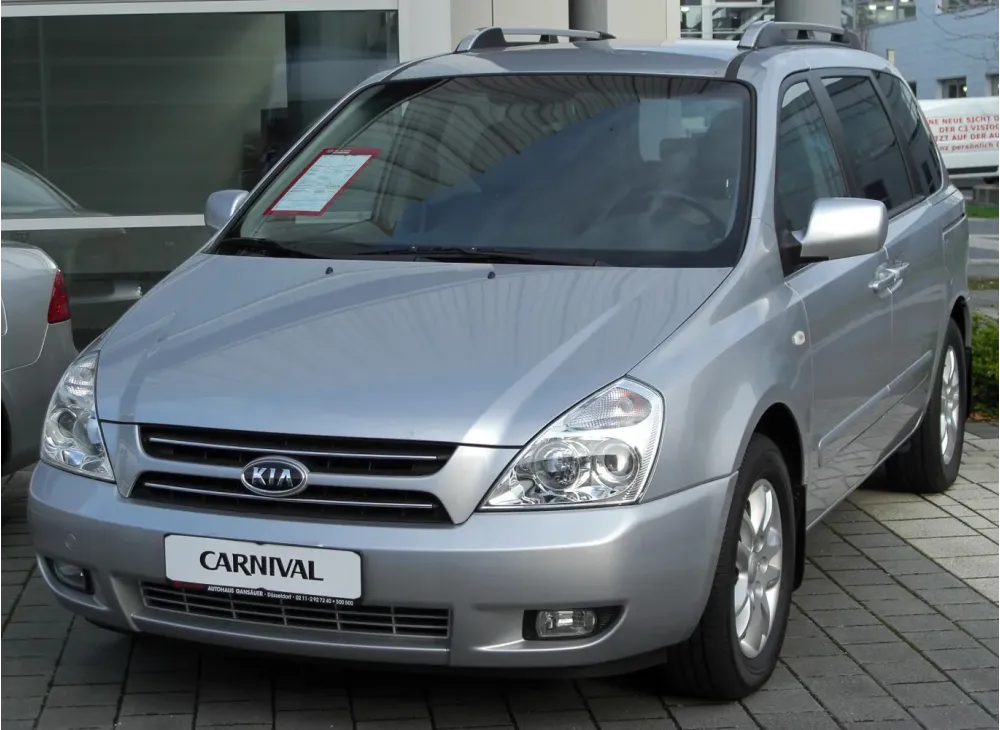
Click on image to view the full photo gallery
Kia Carnival II (VQ) 2.9 CRDi (185 Hp) Automatic
Overall Rating
Kia Carnival:
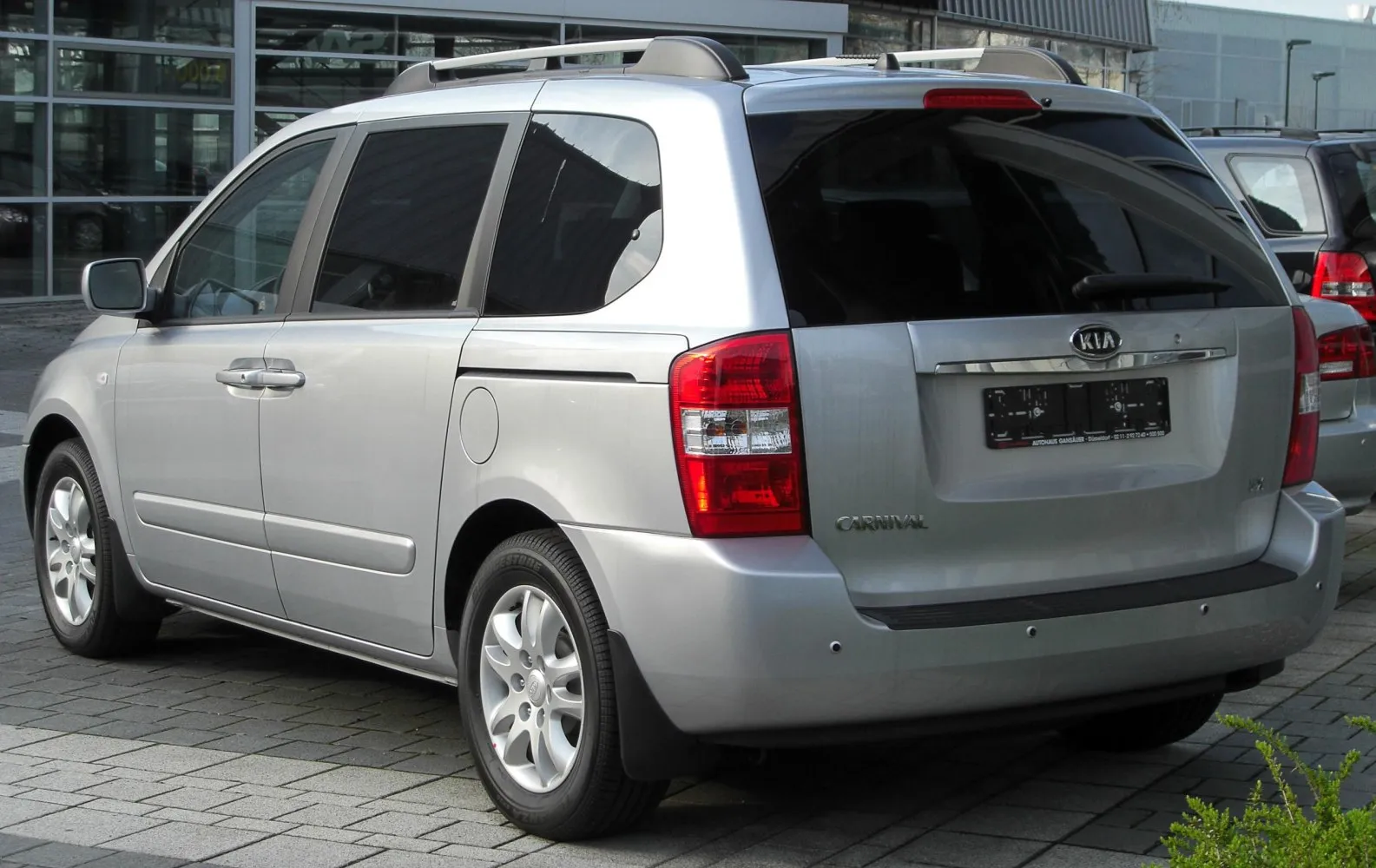
The Kia Carnival is a minivan manufactured by the Korean automaker Kia since 1998. It is marketed globally under various nameplates, prominently as the Kia Sedona.
The first-generation Carnival was introduced in January 1998, and was marketed in a single, short wheelbase version. Second-generation models were marketed in short and long wheelbase variants. A rebadged variant of the second generation was offered in North America as the Hyundai Entourage. Beginning in 2010, the second-generation model received updated equipment, including Kia's corporate Tiger Nose grille, as introduced by its then new design chief, Peter Schreyer. Kia introduced its third-generation minivan in 2014, solely in a long wheelbase format. The fourth generation was introduced in 2020, when Kia also began using the Carnival nameplate worldwide....(Read more on Wikipedia)
II (VQ) Overview:
Kia Carnival (II (VQ)). With 343 Nm of torque, it offers ample pulling power. It has moderate fuel consumption (~10.2 l/100km). At around 2114 kg, it’s on the heavier side. Front‑wheel drive delivers efficiency and easy handling. The top speed reaches 194 km/h. A spacious vehicle designed to transport passengers comfortably, often with sliding doors. With seating for 7, it’s perfect for larger families.
2.9 CRDi (185 Hp) Automatic Verdict:

Performance Verdict
Combining the robust 185 Hp diesel engine with an automatic transmission, this trim offers an excellent blend of strong, accessible torque and effortless driving, perfect for family duties.
Fuel Economy
Maintaining an impressive 7.8 l/100 km, this automatic diesel variant delivers strong fuel economy, making it a practical and cost-effective option for a large minivan.
Pros and Cons:
Pros:
- • Spacious and versatile interior with seating for seven
- • Comfortable ride quality, ideal for long journeys
- • Strong and fuel-efficient diesel engine options
- • Good value for money on the used market
- • Practical features for families
Cons:
- • Thirsty petrol V6 engine
- • Handling can feel ponderous due to its size
- • Some interior plastics feel less premium
- • Older models may face common reliability issues with age
- • Euro NCAP child and pedestrian safety scores were only average
Specifications:
Specifications are compared to those of the previous generation(I (UP/GQ, facelift 2001): 2002 - 2006).
| General: | |
|---|---|
| Brand: | Kia |
| Model: | Carnival |
| Generation: | II (VQ) |
| Modification (Engine): | 2.9 CRDi (185 Hp) Automatic |
| Start of production: | 2006 |
| End of production: | 2010 |
| Powertrain Architecture: | Internal Combustion engine |
| Body type: | Minivan |
| Seats: | 7 |
| Doors: | 5 |
| Engine: | |
|---|---|
| Power: | 185 Hp @ 3800 rpm. |
| Power per litre: | 63.7 Hp/l |
| Torque: | 343 Nm @ 1750-3500 rpm. |
| Engine Model/Code: | J3 [Same engine] More details about the engine J3 |
| Engine displacement: | 2902 |
| Number of cylinders: | 4 |
| Engine configuration: | Inline |
| Number of valves per cylinder: | 4 |
| Fuel injection system: | Diesel Commonrail |
| Engine aspiration: | Turbocharger, Intercooler |
| Valvetrain: | DOHC |
| Engine oil capacity: | 6.6 l |
| Coolant: | 10 l |
| Engine layout: | Front, Transverse |
| Cylinder Bore: | 97.1 mm mm |
| Piston Stroke: | 98 mm mm |
| Compression ratio: | 18:1 |
| Performance: | |
|---|---|
| Fuel Type: | Diesel |
| Fuel consumption (economy) - urban: | 10.2 l/100 km |
| Fuel consumption (economy) - extra urban: | 6.4 l/100 km |
| Fuel consumption (economy) - combined: | 7.8 l/100 km |
| Maximum speed: | 194 km/h |
| Weight-to-power ratio: | 11.4 kg/Hp, 87.5 Hp/tonne |
| Weight-to-torque ratio: | 6.2 kg/Nm, 162.3 Nm/tonne |
| Space: | |
|---|---|
| Kerb Weight: | 2114 |
| Max. weight: | 2920 |
| Max load: | 806 |
| Trunk (boot) space - maximum: | 1666 l |
| Trunk (boot) space - minimum: | 241 l |
| Fuel tank capacity: | 80 l |
| Size: | |
|---|---|
| Length: | 4810 mm mm [115mm less] |
| Width: | 1985 mm mm [85mm more] |
| Height: | 1815 mm mm [85mm more] |
| Wheelbase: | 2890 mm mm [15mm less] |
| Front track: | 1685 mm |
| Rear (Back) track: | 1685 mm |
| Minimum turning circle (turning diameter): | 11.64 m [above average] |
| Powertrain: | |
|---|---|
| Drivetrain Architecture | The Internal combustion engine (ICE) drives the front wheels of the vehicle. |
| Drive wheel | Front wheel drive |
| Number of gears | 5 |
| Transmission type | Automatic |
| Front brakes | Ventilated discs [Best for performance and cooling.] |
| Rear brakes | Drum [bad for performance and cooling.] |
| Assisting systems | ABS (Anti-lock braking system) |
| Steering type | Steering rack and pinion |
| Tires size | 225/70 R16 |
| Wheel rims size | 16 |
| Front suspension | Independent type McPherson |
| Rear suspension | Dependent spring suspension with transverse stabilizer |







Better than its competitors? Tell us why the Kia Carnival stands out.