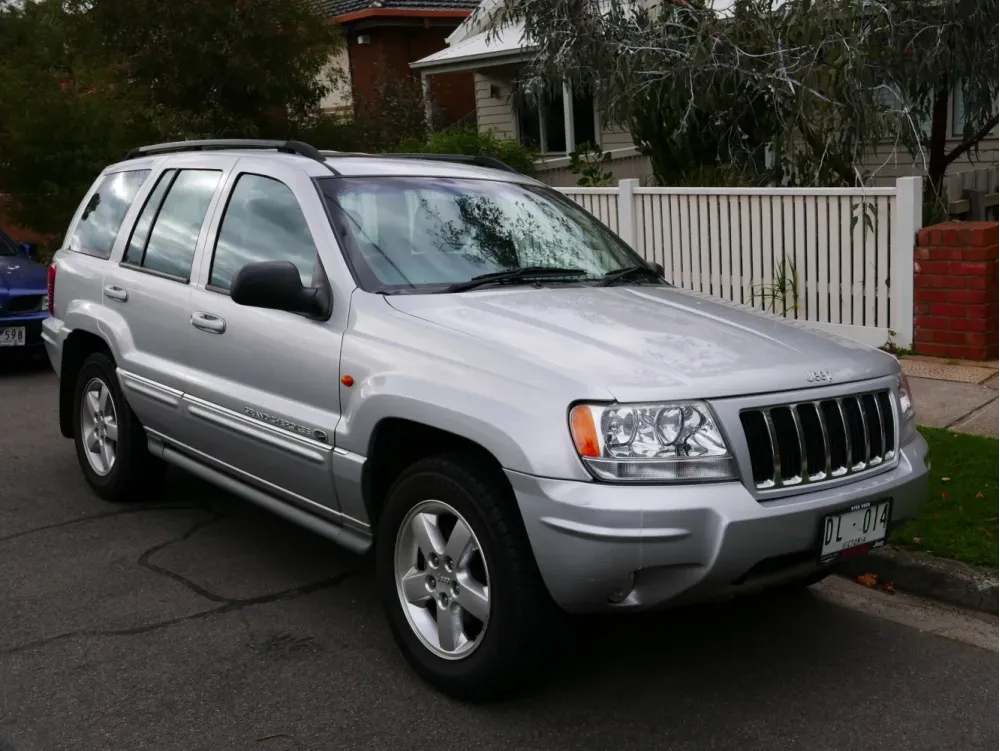
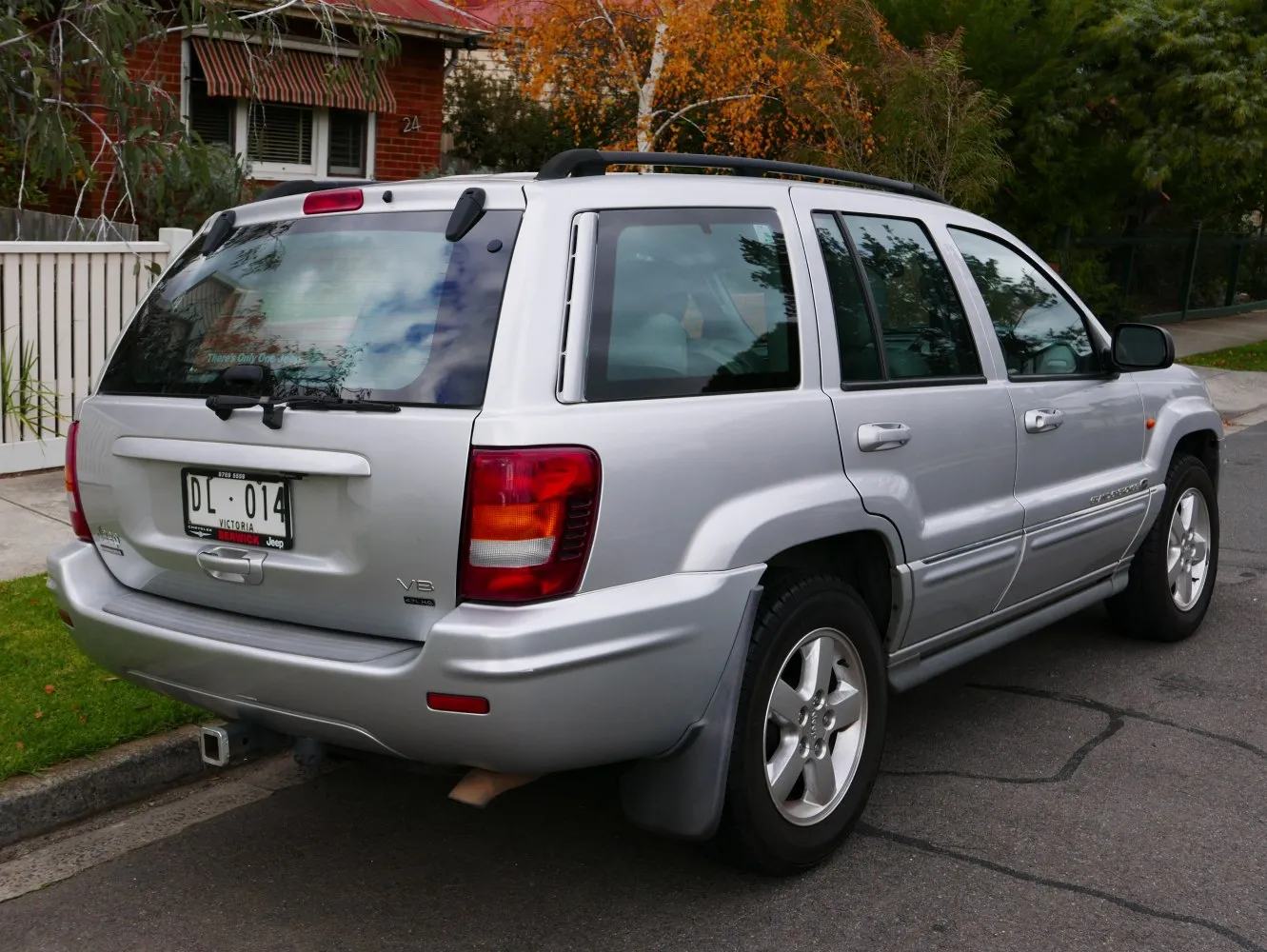
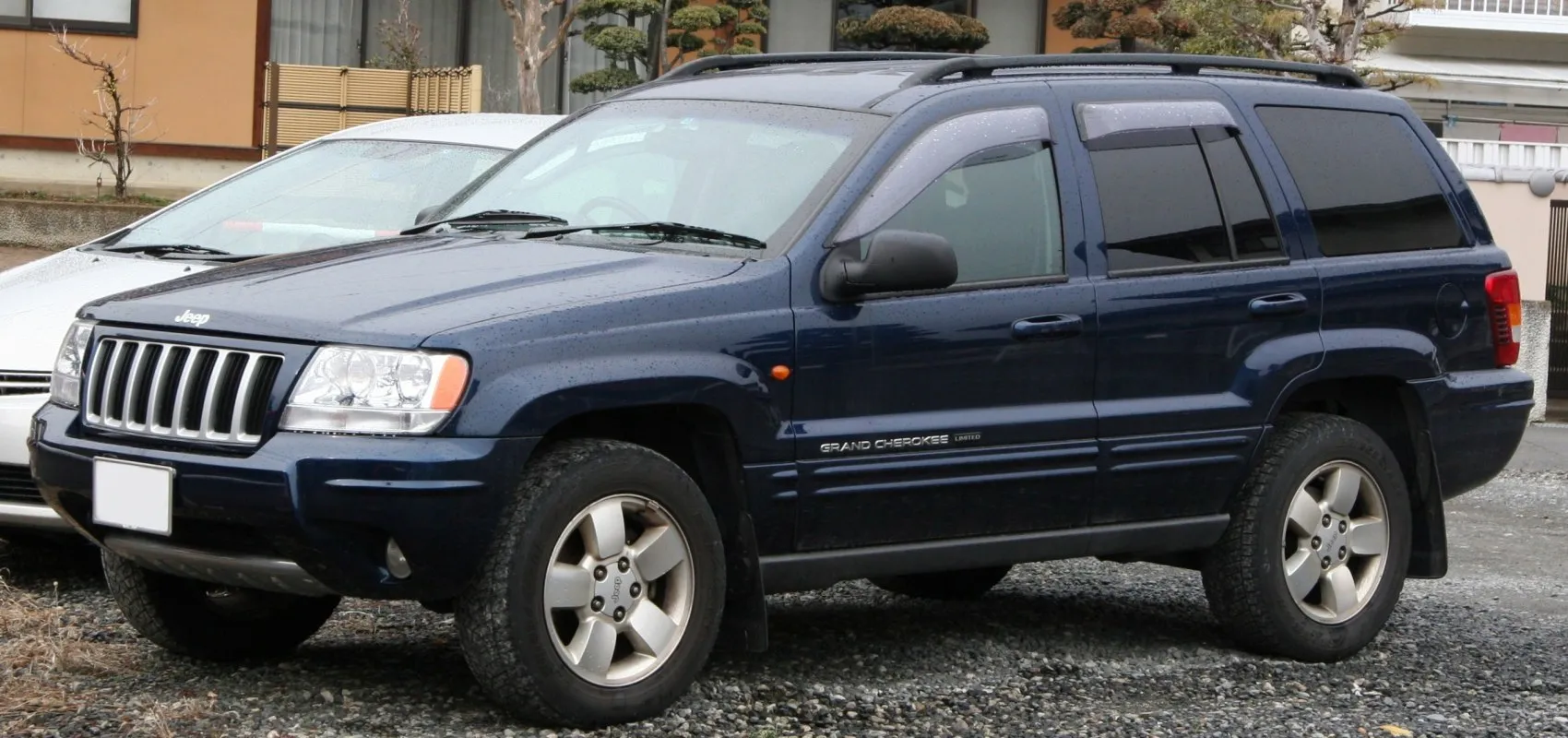
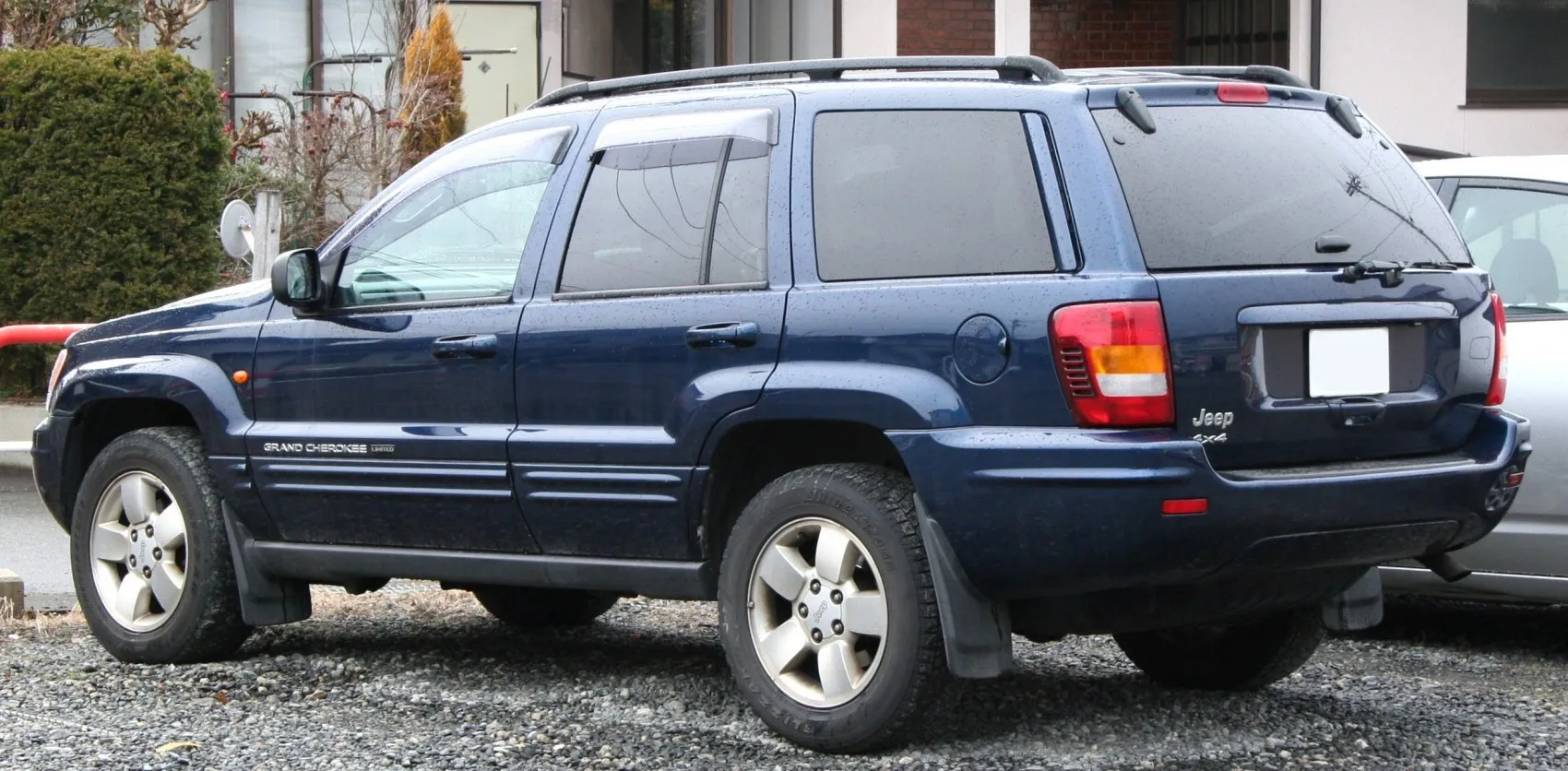
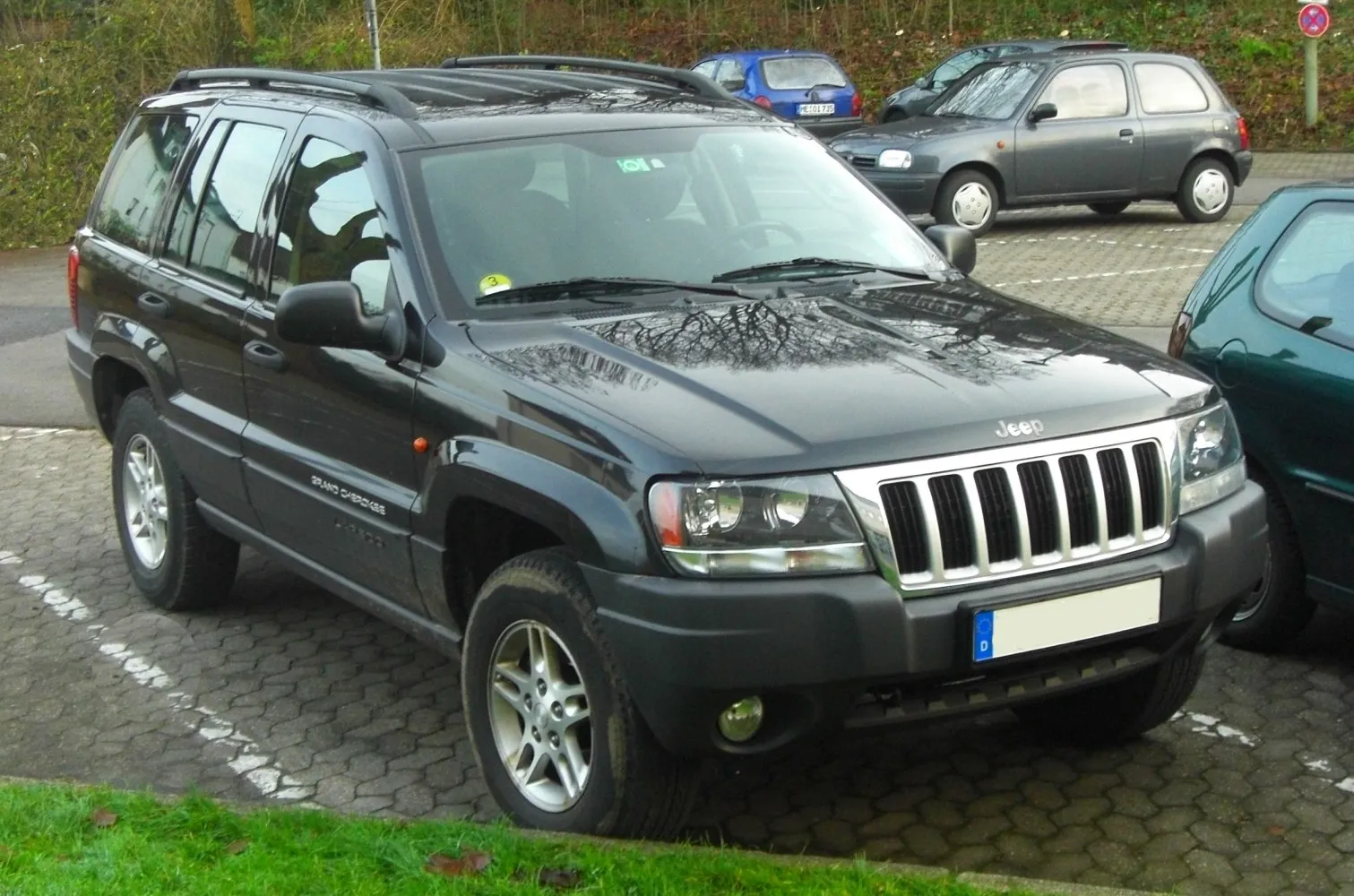
Jeep Grand Cherokee II (WJ, facelift 2003) 4.7 HO V8 (258 Hp) 4x4 Automatic
Jeep Grand Cherokee:
The Jeep Grand Cherokee is a range of mid-sized sport utility vehicles produced by American manufacturer Jeep. At its introduction, while most SUVs were still manufactured with body-on-frame construction, the Grand Cherokee has used a unibody chassis from the start.
The Grand Cherokee's origins date back to 1983, when American Motors Corporation was designing a successor to the Jeep Cherokee. Three outside designers—Larry Shinoda, Alain Clenet, and Giorgetto Giugiaro—were also under contract with AMC to create and build a clay model of the Cherokee XJ replacement, then known as the "XJC" project. However, the basic design for the Cherokee's replacement was well underway by AMC's in-house designers and the 1989 Jeep Concept 1 show car foretold the basic design....(Read more on Wikipedia)
II (WJ, facelift 2003) Overview:
Jeep Grand Cherokee (II (WJ, facelift 2003)). With 425 Nm of torque, it offers ample pulling power. With a weight of 1994 kg, it falls in the mid‑range. All‑wheel drive provides excellent grip, ideal for off‑road use. Acceleration is good (0–100 km/h in 8.3 s). The top speed reaches 206 km/h. A sport utility vehicle offering higher ground clearance and versatile cargo space. Seating for 5 makes it ideal for daily use.
Pros and Cons:
Pros:
- • High-performance engine delivering 265 hp.
- • Rear-wheel drive layout for enhanced handling and balance.
- • Ventilated disc brakes for reliable cooling and stopping power.
- • Generous trunk capacity of 1104 Liters.
Cons:
- • Relatively high fuel consumption: 13.8 L/100 km combined.
- • Previous generation model; may lack the latest driver-assist technologies.
Specifications:
Specifications are compared to those of the previous generation(II (WJ): 2002 - 2003).
| General: |
| Brand: | Jeep |
|---|
| Model: | Grand Cherokee |
|---|
| Generation: | II (WJ, facelift 2003) |
|---|
| Modification (Engine): | 4.7 HO V8 (258 Hp) 4x4 Automatic |
|---|
| Start of production: | 2003 |
|---|
| End of production: | 2004 |
|---|
| Powertrain Architecture: | Internal Combustion engine |
|---|
| Body type: | SUV |
|---|
| Seats: | 5 |
|---|
| Doors: | 5 |
|---|
| Engine: |
| Power: | 258 Hp @ 5200 rpm. Same horsepower |
|---|
| Power per litre: | 54.9 Hp/l [2mm less] |
|---|
| Torque: | 425 Nm @ 3500 rpm. |
|---|
| Engine Model/Code: | EVC More details about the engine EVC |
|---|
| Engine displacement: | 4701 |
|---|
| Number of cylinders: | 8 |
|---|
| Engine configuration: | V-engine |
|---|
| Number of valves per cylinder: | 2 |
|---|
| Fuel injection system: | Multi-port manifold injection |
|---|
| Engine aspiration: | Naturally aspirated engine |
|---|
| Valvetrain: | SOHC |
|---|
| Engine oil capacity: | 5.7 l |
|---|
| Coolant: | 13.7 l |
|---|
| Engine layout: | Front, Longitudinal |
|---|
| Cylinder Bore: | 93 mm mm |
|---|
| Piston Stroke: | 86.5 mm mm |
|---|
| Compression ratio: | 10.2:1 |
|---|
| Performance: |
| Fuel Type: | Petrol (Gasoline) |
|---|
| Fuel consumption (economy) - urban: | 22 l/100 km |
|---|
| Fuel consumption (economy) - extra urban: | 12 l/100 km |
|---|
| Fuel consumption (economy) - combined (NEDC): | 15.9 l/100 km |
|---|
| Fuel consumption (economy) - urban (NEDC): | 22 l/100 km |
|---|
| Fuel consumption (economy) - extra urban (NEDC): | 12 l/100 km |
|---|
| Fuel consumption (economy) - combined: | 15.9 l/100 km |
|---|
| Emission standard: | Euro 3 |
|---|
| Acceleration 0 - 100 km/h: | 8.3 sec |
|---|
| Acceleration 0 - 62 mph: | 8.3 sec |
|---|
| Maximum speed: | 206 km/h |
|---|
| Weight-to-power ratio: | 7.7 kg/Hp, 129.4 Hp/tonne |
|---|
| Weight-to-torque ratio: | 4.7 kg/Nm, 213.1 Nm/tonne |
|---|
| Acceleration 0 - 60 mph: | 7.9 sec |
|---|
| Space: |
| Kerb Weight: | 1994 |
|---|
| Max. weight: | 2495 |
|---|
| Max. roof load: | 68 kg |
|---|
| Max load: | 501 |
|---|
| Trunk (boot) space - maximum: | 2047 l |
|---|
| Trunk (boot) space - minimum: | 1104 l |
|---|
| Permitted trailer load with brakes (12%): | 3360 kg |
|---|
| Fuel tank capacity: | 78 l |
|---|
| Permitted trailer load without brakes: | 750 kg |
|---|
| Permitted towbar download: | 140 kg |
|---|
| Size: |
| Ramp-over (brakeover) angle: | 22.6° |
|---|
| Length: | 4611 mm mm [2mm less] |
|---|
| Width: | 1858 mm mm [22mm more] |
|---|
| Height: | 1805 mm mm [43mm more] |
|---|
| Wheelbase: | 2690 mm mm [1mm less] |
|---|
| Width including mirrors: | 2180 mm |
|---|
| Front track: | 1511 mm |
|---|
| Rear (Back) track: | 1511 mm |
|---|
| Ride height (ground clearance): | 221 mm |
|---|
| Minimum turning circle (turning diameter): | 11.1 m [above average] |
|---|
| Approach angle: | 36.7° |
|---|
| Departure angle: | 28.6° |
|---|
| Powertrain: |
| Drivetrain Architecture | The Internal combustion engine (ICE) drives the rear wheels permanently, and the front wheels are driven through an electrically or mechanically operated clutch if necessary. |
|---|
| Drive wheel | All wheel drive (4x4) |
|---|
| Number of gears | 5 |
|---|
| Transmission type | Automatic |
|---|
| Front brakes | Ventilated discs, 305 mm [Best for performance and cooling.] |
|---|
| Rear brakes | Disc, 305 mm [above average] |
|---|
| Assisting systems | ABS (Anti-lock braking system) |
|---|
| Steering type | Cone worm with recirculation balls |
|---|
| Power steering | Hydraulic Steering |
|---|
| Tires size | 235/65 R17 |
|---|
| Wheel rims size | 7.5J x 17 |
|---|
| Front suspension | Coil spring, Rigid axle suspension, Transverse stabilizer |
|---|
| Rear suspension | Rigid axle suspension, Transverse stabilizer, Trailing arm, Coil spring |
|---|











Does the Jeep Grand Cherokee live up to the hype? Give us your verdict!