
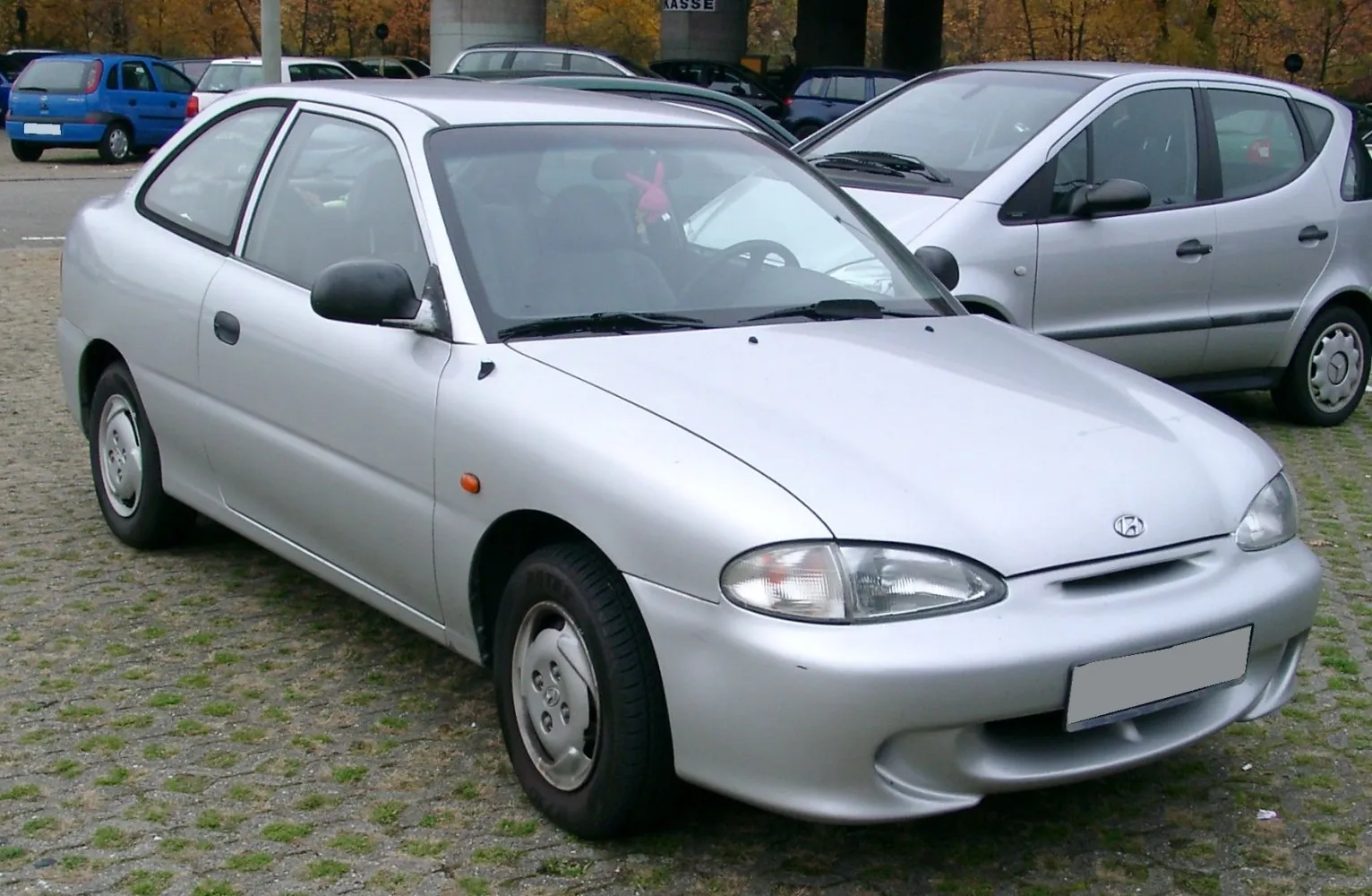
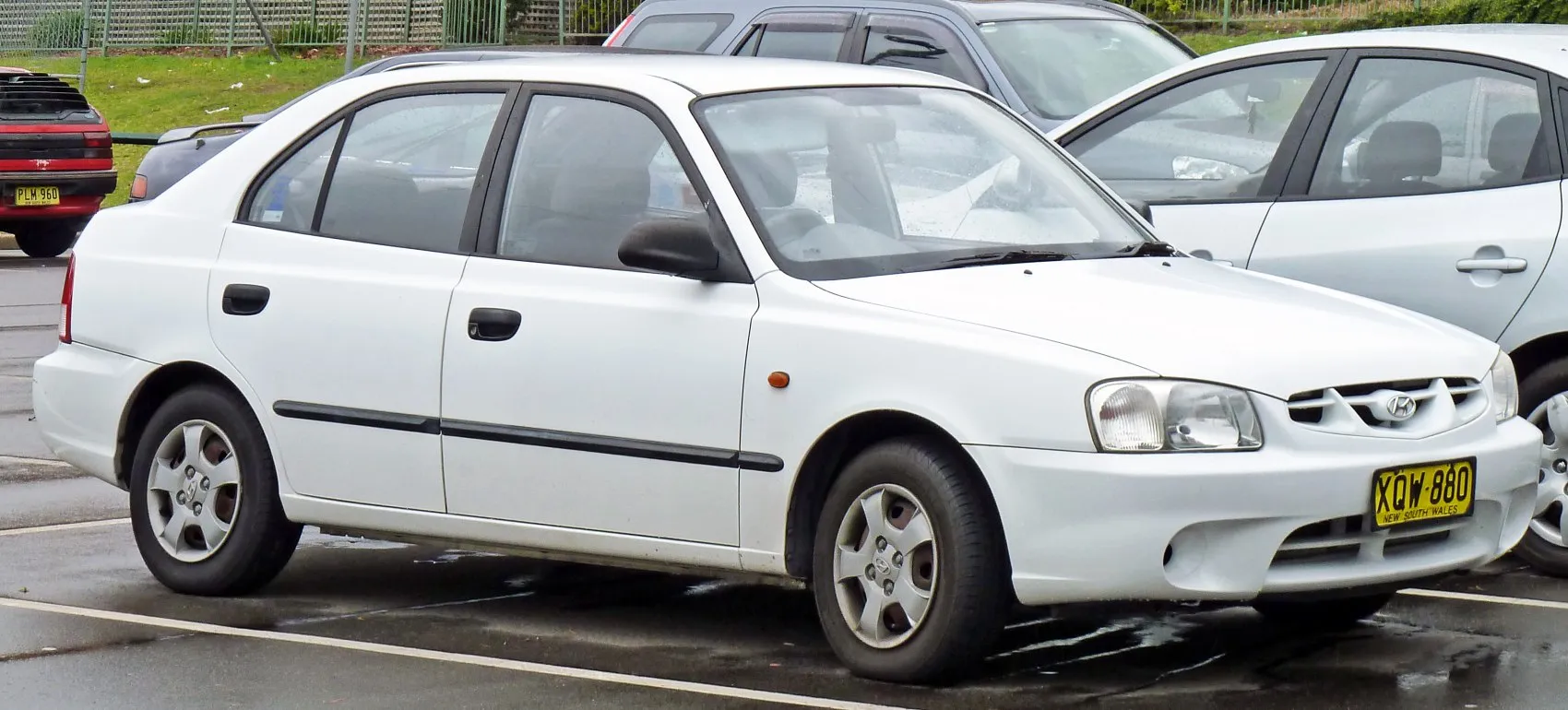
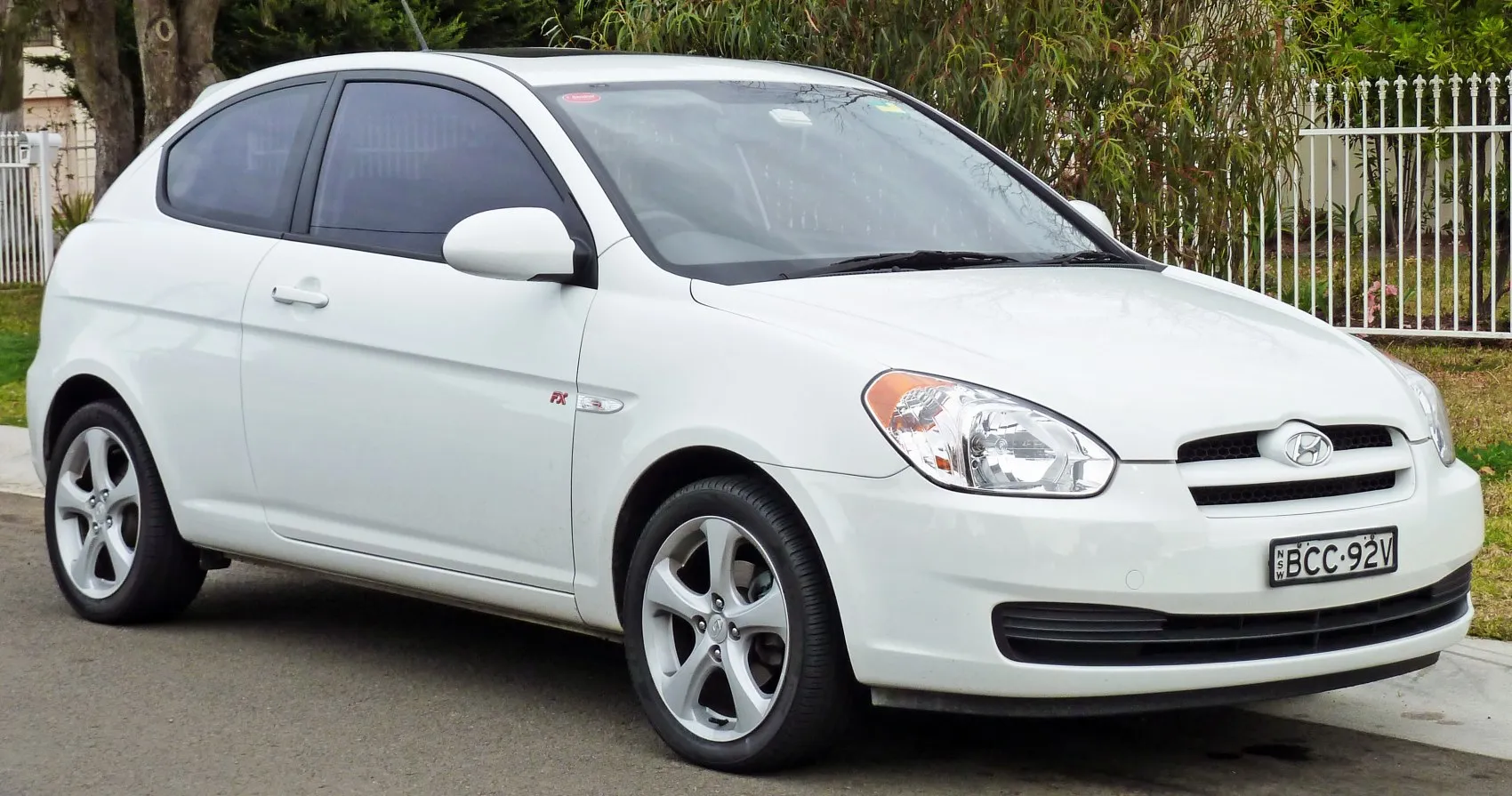
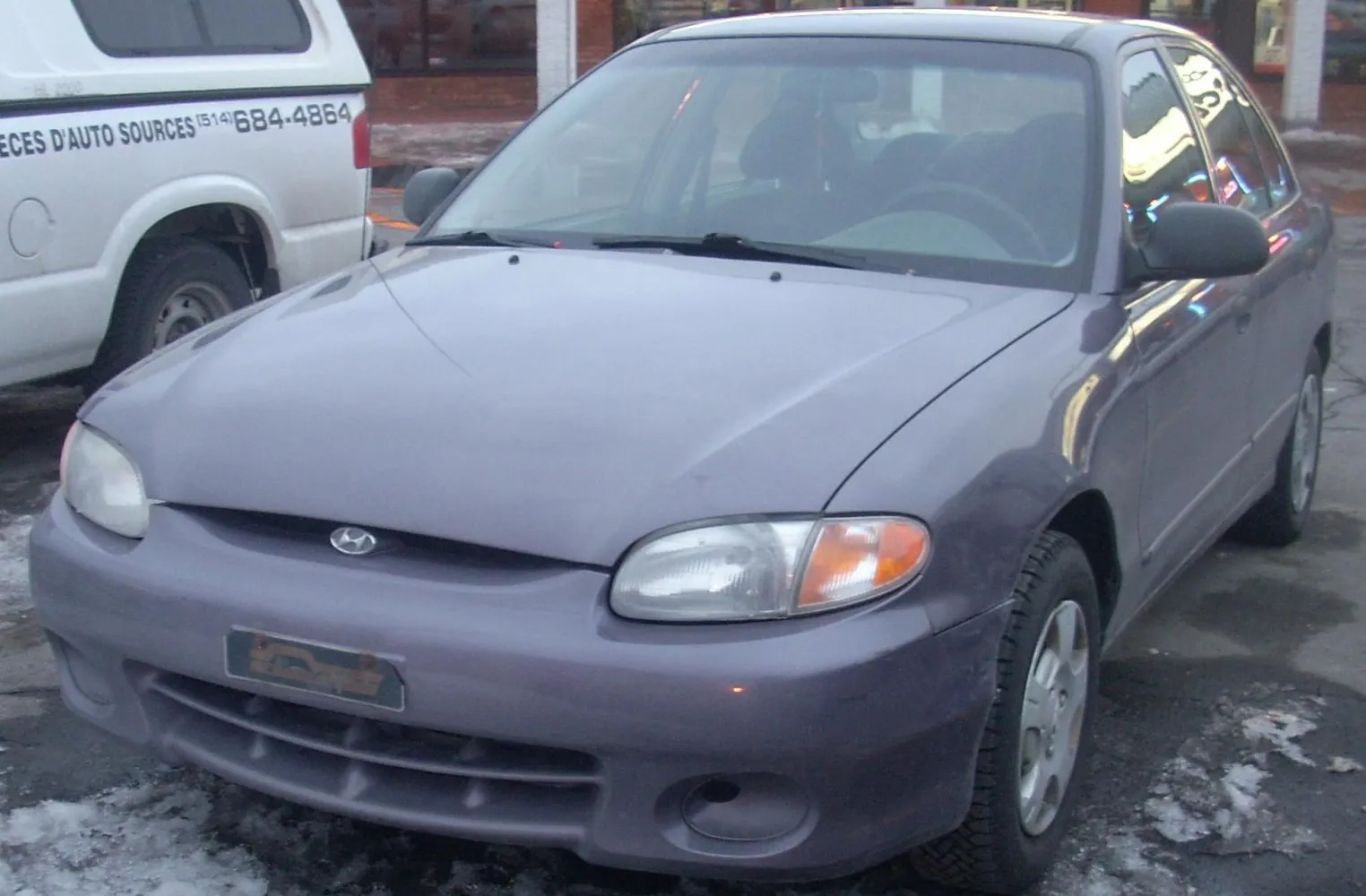
Click on image to view the full photo gallery
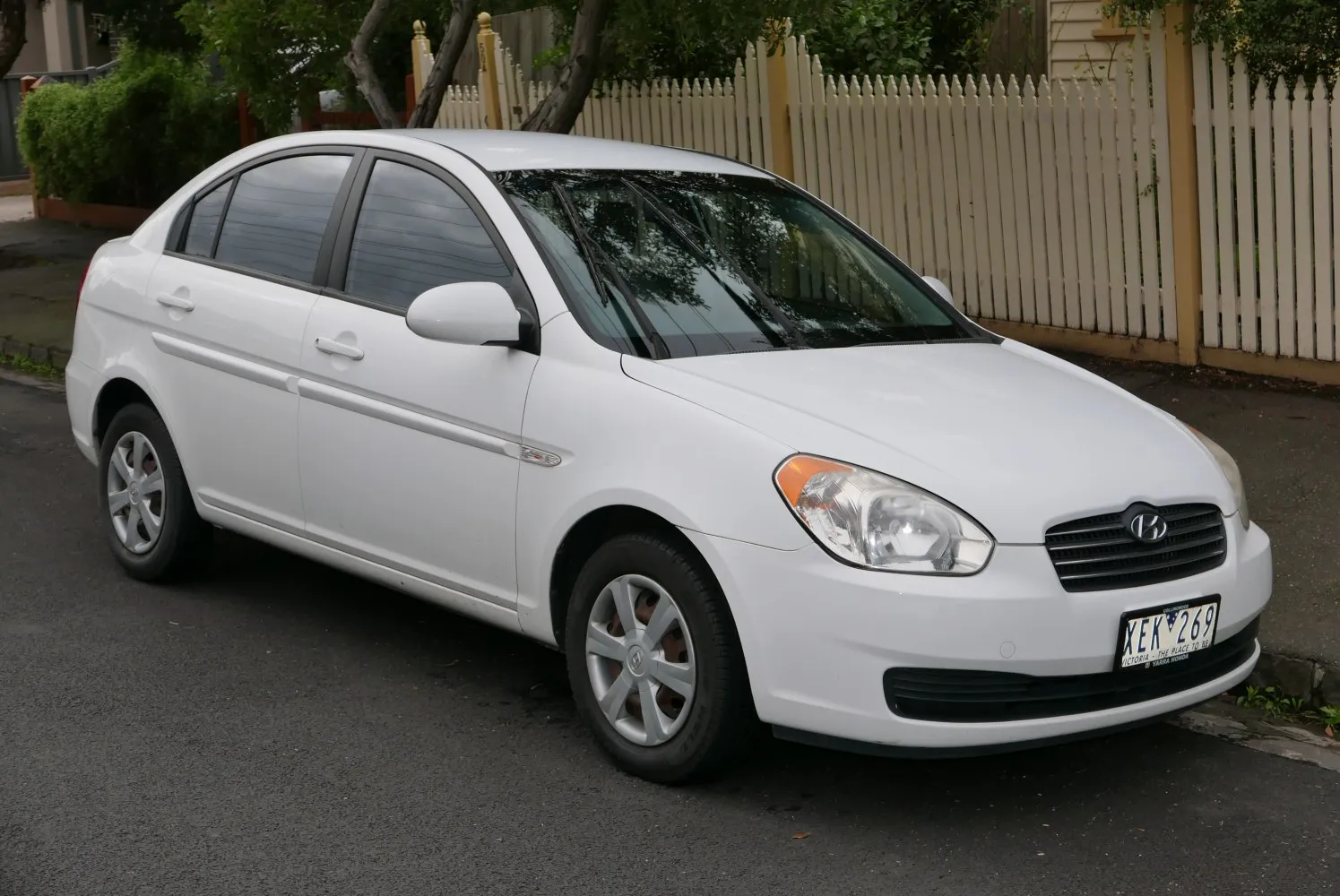
Hyundai Accent II 1.5 i 16V (102 Hp) Automatic
Overall Rating
Hyundai Accent:
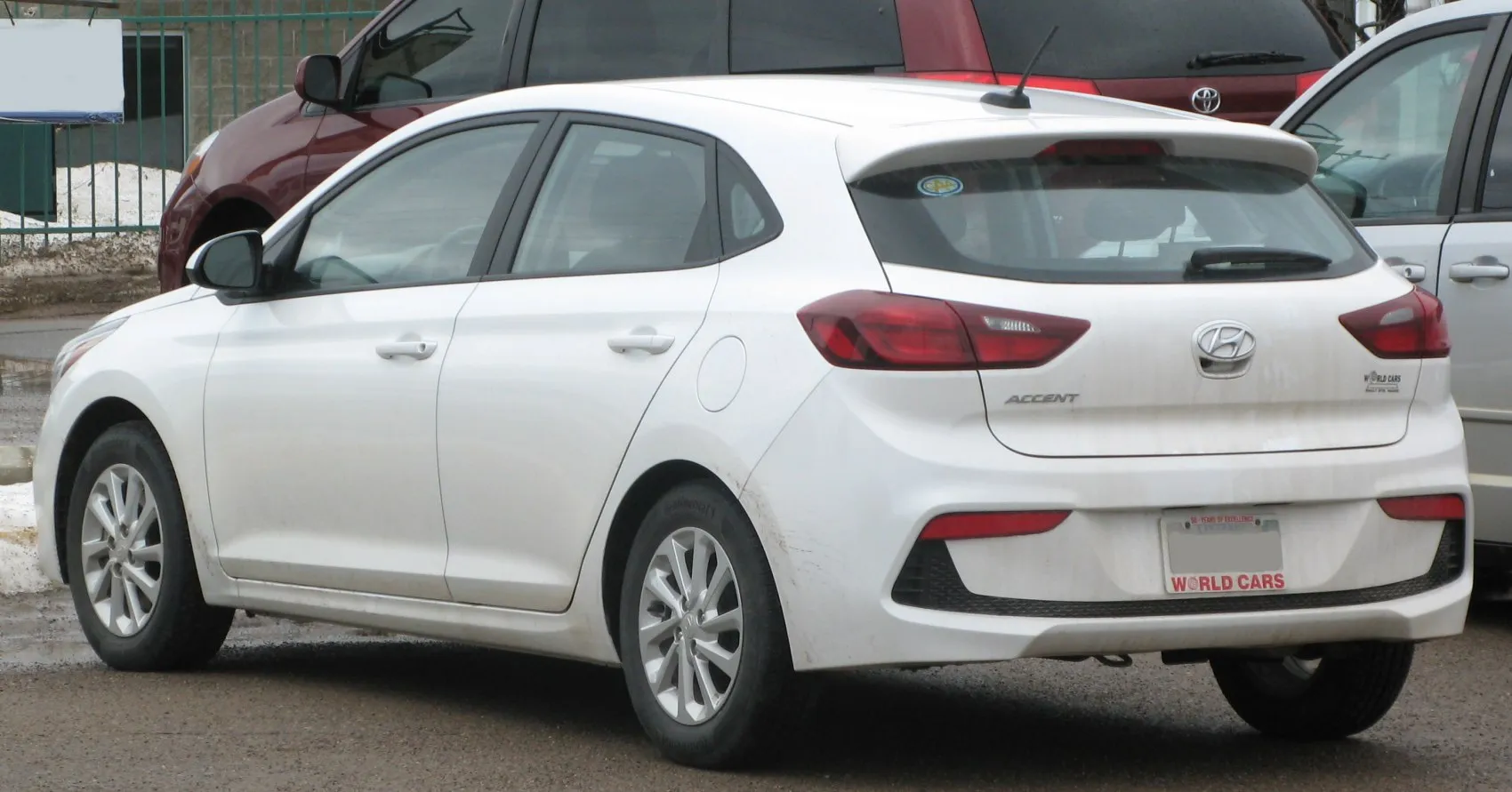
The Hyundai Accent , or Hyundai Verna is a subcompact car produced by Hyundai. In Australia, the first generation models carried over the Hyundai Excel name used by the Accent's predecessor. The Accent was replaced in 2000 by the Hyundai Verna in South Korea, although most international markets, including the US, retained the "Accent" name. The "Accent" name is an acronym of Advanced Compact Car of Epoch-making New Technology.
The Accent is produced for the Chinese market by Beijing Hyundai Co. , a joint venture with Beijing Automotive Industry Corp. For the Russian market it was assembled by the TagAZ plant in Taganrog until 2011, and since 2011 it was assembled by the HMMR plant in Saint Petersburg and sold under the new name Hyundai Solaris. In Mexico, the Accent was marketed until 2014 by Chrysler as the Dodge Attitude, previously known as the Verna by Dodge. In Venezuela, Chrysler marketed these models as the Dodge Brisa until 2006. The Brisa was assembled by Mitsubishi Motors at its plant in Barcelona, Venezuela. Since 2002, the Accent had been the longest-running small family car sold in North America. In Puerto Rico, the second and third generations were sold as the Hyundai Brio....(Read more on Wikipedia)
II Overview:
Hyundai Accent (II). With 136 Nm of torque, it offers ample pulling power. Weighing only 1080 kg, it’s quite light. Front‑wheel drive delivers efficiency and easy handling. Acceleration is relatively slow (0–100 km/h in 10.5 s). The top speed reaches 179 km/h. A four-door car with a separate trunk, ideal for families and daily commuting. Seating for 5 makes it ideal for daily use.
The Accent II achieved a 3-star Euro NCAP rating for adult occupant protection in 2000, which was acceptable for its class and era, though it lacks modern safety features.
1.5 i 16V (102 Hp) Automatic Verdict:

Performance Verdict
Offers adequate performance for daily driving, with smooth automatic shifts suitable for urban and light highway use.
Fuel Economy
Moderate fuel consumption for an automatic, acceptable for mixed driving conditions.
Pros and Cons:
Pros:
- • Affordable purchase and running costs
- • Generally reliable and durable engines
- • Simple and easy to maintain mechanics
- • Good fuel economy on most variants, especially diesel
- • Practical and spacious interior for its class
Cons:
- • Basic interior quality and limited features
- • Modest performance on lower-powered engines
- • Limited safety features by modern standards (3-star Euro NCAP)
- • Not particularly refined or engaging to drive
- • Dated design compared to newer competitors
Specifications:
Specifications are compared to those of the previous generation(I: 1995 - 1999).
| General: | |
|---|---|
| Brand: | Hyundai |
| Model: | Accent |
| Generation: | II |
| Modification (Engine): | 1.5 i 16V (102 Hp) Automatic |
| Start of production: | 1999 |
| End of production: | 2003 |
| Powertrain Architecture: | Internal Combustion engine |
| Body type: | Sedan |
| Seats: | 5 |
| Doors: | 4 |
| Engine: | |
|---|---|
| Power: | 102 Hp @ 5800 rpm. Same horsepower |
| Power per litre: | 68.2 Hp/l [118mm more] |
| Torque: | 136 Nm @ 3000 rpm. |
| Engine Model/Code: | Alpha II / G4EC More details about the engine Alpha II / G4EC |
| Engine displacement: | 1495 |
| Number of cylinders: | 4 |
| Engine configuration: | Inline |
| Number of valves per cylinder: | 4 |
| Fuel injection system: | Multi-port manifold injection |
| Engine aspiration: | Naturally aspirated engine |
| Valvetrain: | DOHC |
| Engine oil capacity: | 3.3 l |
| Coolant: | 5.5 l |
| Engine layout: | Front, Transverse |
| Cylinder Bore: | 75.5 mm |
| Piston Stroke: | 83.5 mm |
| Compression ratio: | 9.5:1 |
| Performance: | |
|---|---|
| Fuel Type: | Petrol (Gasoline) |
| Fuel consumption (economy) - combined: | 6.7 l/100 km |
| Acceleration 0 - 100 km/h: | 10.5 sec |
| Acceleration 0 - 62 mph: | 10.5 sec |
| Maximum speed: | 179 km/h |
| Weight-to-power ratio: | 10.6 kg/Hp, 94.4 Hp/tonne |
| Weight-to-torque ratio: | 7.9 kg/Nm, 125.9 Nm/tonne |
| Acceleration 0 - 60 mph: | 10 sec |
| Space: | |
|---|---|
| Kerb Weight: | 1080 |
| Max. weight: | 1550 |
| Max load: | 470 |
| Trunk (boot) space - minimum: | 375 l |
| Fuel tank capacity: | 45 l |
| Size: | |
|---|---|
| Length: | 4235 mm [118mm more] |
| Width: | 1670 mm [50mm more] |
| Height: | 1395 mm [1mm more] |
| Wheelbase: | 2440 mm [40mm more] |
| Front track: | 1435 mm |
| Rear (Back) track: | 1425 mm |
| Powertrain: | |
|---|---|
| Drivetrain Architecture | The Internal combustion engine (ICE) drives the front wheels of the vehicle. |
| Drive wheel | Front wheel drive |
| Number of gears | 4 |
| Transmission type | Automatic |
| Front brakes | Ventilated discs [Best for performance and cooling.] |
| Rear brakes | Drum [bad for performance and cooling.] |
| Assisting systems | ABS (Anti-lock braking system) |
| Steering type | Steering rack and pinion |
| Power steering | Hydraulic Steering |
| Tires size | 185/60 R14 H |
| Wheel rims size | 14 |
| Front suspension | Spring Strut |
| Rear suspension | Spring Strut |






Show off your Hyundai Accent knowledge – drop a review below!