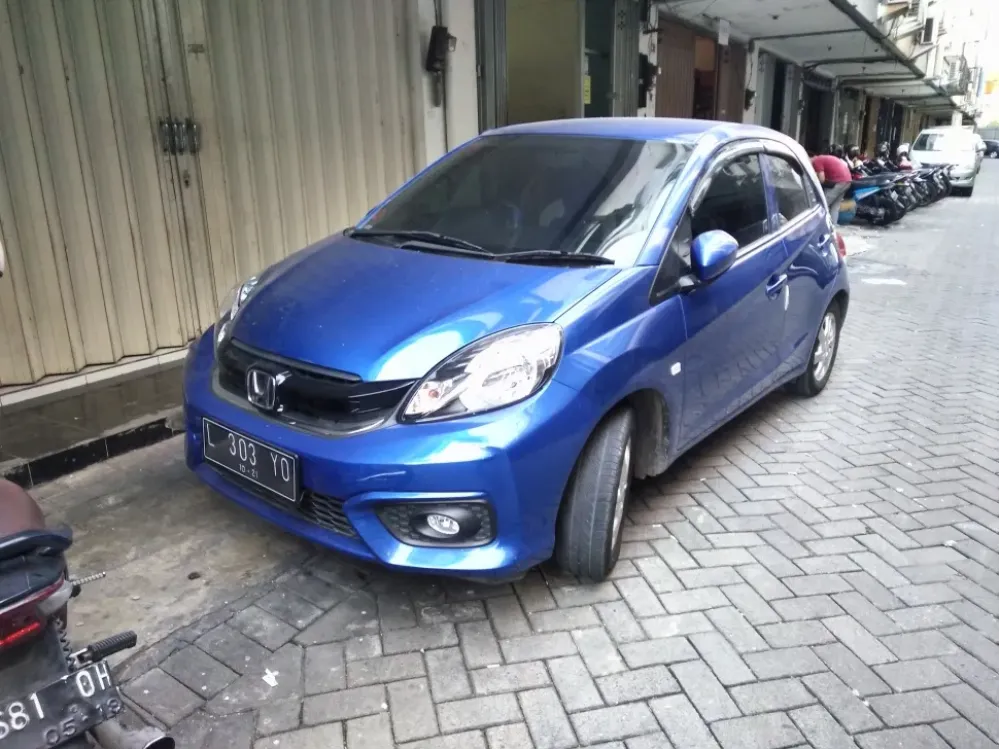
Honda Brio I (facelift 2016) 1.2 i-VTEC (88 Hp)
People\'s Opinion
N/A / 5
Honda Brio:
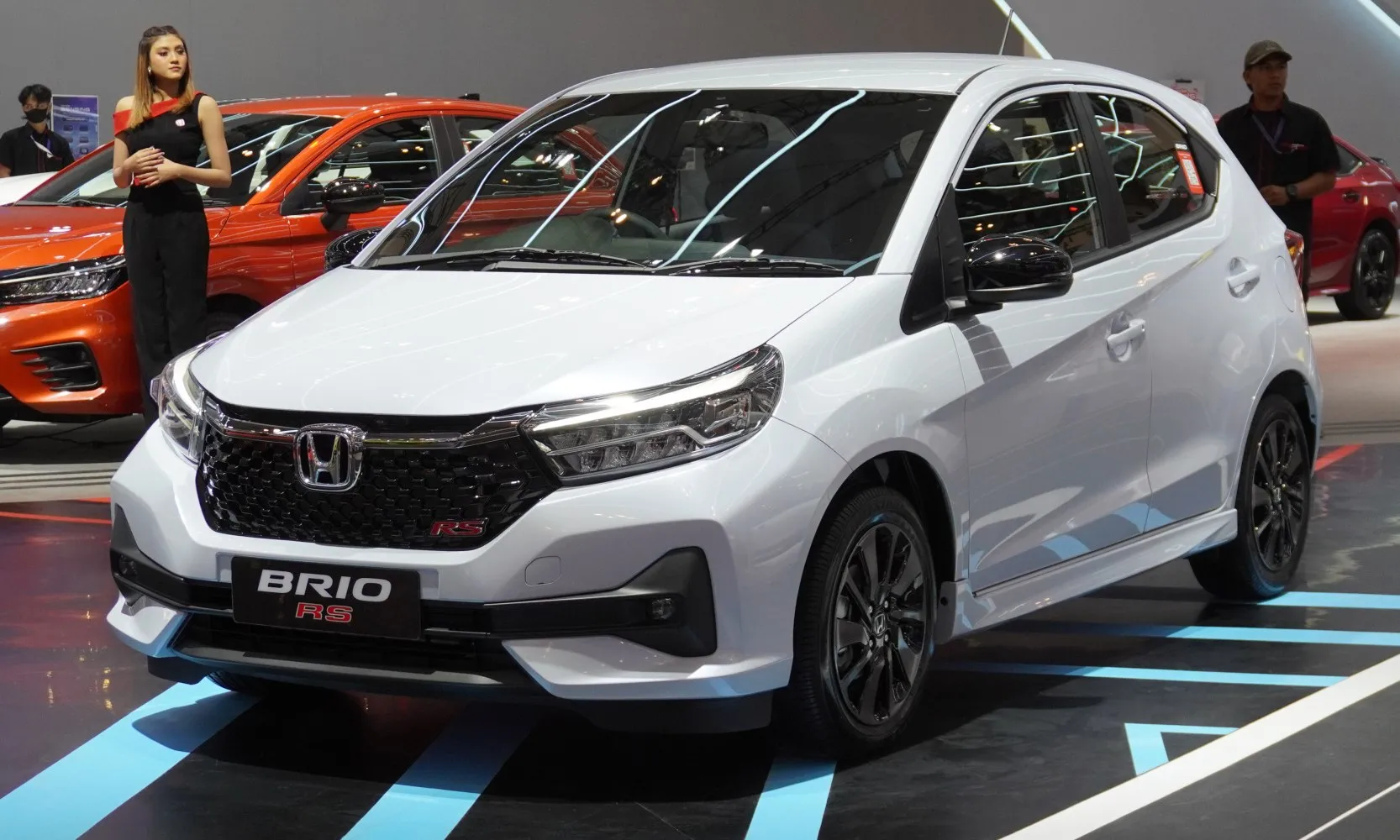
The Honda Brio is a city car produced by Honda since 2011. It is mainly sold in Southeast Asia and also in other regions, positioned as an entry-level hatchback model slotted below the Fit/Jazz and the City. Along with the complementary Amaze sedan, it is the smallest car in Honda's global line-up as of 2023, excluding Japanese market kei cars.
The name Brio is Italian for 'vivacity' or 'verve'. In August 2013 in Indonesia, several entry-level Brio variants received an additional Indonesia-inspired name to comply with the country's LCGC program. The name Satya is used as the suffix....(Read more on Wikipedia)
I (facelift 2016) Overview:
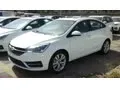
Honda Brio (I (facelift 2016)). With 109 Nm of torque, it offers ample pulling power. Weighing only 920 kg, it’s quite light. Front‑wheel drive delivers efficiency and easy handling. A compact car with a rear door that swings upward to provide access to the cargo area. Seating for 5 makes it ideal for daily use.
Performance Verdict
The 1.2L i-VTEC engine provides peppy performance for city driving, feeling nimble due to the car's light kerb weight. Highway overtakes require planning.
Fuel Economy
Excellent fuel efficiency is a major highlight, making it very economical for daily commutes and a key selling point.
Best Use Case:
Urban Commuting / First Car
Pros and Cons:
Pros:
- • Fuel-efficient 1.2L i-VTEC engine
- • Compact dimensions for easy city maneuverability and parking
- • Honda's renowned reliability and low maintenance
- • Surprisingly spacious interior for its footprint
- • Nimble handling in urban environments
Cons:
- • Basic interior plastics and material quality
- • Limited high-speed stability and noise insulation
- • Modest highway performance, especially with a full load
- • Safety features might be basic depending on market and trim level
Specifications:
| General: |
| Brand: | Honda |
|---|
| Model: | Brio |
|---|
| Generation: | I (facelift 2016) |
|---|
| Modification (Engine): | 1.2 i-VTEC (88 Hp) |
|---|
| Start of production: | 2016 |
|---|
| End of production: | 2018 |
|---|
| Powertrain Architecture: | Internal Combustion engine |
|---|
| Body type: | Hatchback |
|---|
| Seats: | 5 |
|---|
| Doors: | 5 |
|---|
| Engine: |
| Power: | 88 Hp @ 6000 rpm. |
|---|
| Power per litre: | 73.5 Hp/l |
|---|
| Torque: | 109 Nm @ 4500 rpm. |
|---|
| Engine displacement: | 1198 |
|---|
| Number of cylinders: | 4 |
|---|
| Engine configuration: | Inline |
|---|
| Number of valves per cylinder: | 4 |
|---|
| Fuel injection system: | Multi-port manifold injection |
|---|
| Engine aspiration: | Naturally aspirated engine |
|---|
| Valvetrain: | SOHC |
|---|
| Engine layout: | Front, Transverse |
|---|
| Performance: |
| Fuel Type: | Petrol (Gasoline) |
|---|
| Weight-to-power ratio: | 10.5 kg/Hp, 95.7 Hp/tonne |
|---|
| Weight-to-torque ratio: | 8.4 kg/Nm, 118.5 Nm/tonne |
|---|
| Space: |
| Kerb Weight: | 920 |
|---|
| Fuel tank capacity: | 35 l |
|---|
| Size: |
| Length: | 3610 mm |
|---|
| Width: | 1680 mm |
|---|
| Height: | 1500 mm |
|---|
| Wheelbase: | 2345 mm |
|---|
| Minimum turning circle (turning diameter): | 9.0 m |
|---|
| Powertrain: |
| Drivetrain Architecture | The Internal combustion engine (ICE) drives the front wheels of the vehicle. |
|---|
| Drive wheel | Front wheel drive |
|---|
| Number of gears | 5 |
|---|
| Transmission type | Manual |
|---|
| Front brakes | Disc |
|---|
| Rear brakes | Drum |
|---|
| Assisting systems | ABS (Anti-lock braking system) |
|---|
| Steering type | Steering rack and pinion |
|---|
| Power steering | Electric Steering |
|---|
| Tires size | 175/65 R14 |
|---|
| Wheel rims size | 14 |
|---|
| Front suspension | Independent type McPherson |
|---|
| Rear suspension | Semi-independent, coil spring |
|---|






Is the Honda Brio your dream ride or just a daily drive? Let's talk!